In the metal construction industry, supply chains rarely stay quiet for long. Disruptions have almost become the norm — as contractors and fabricators have faced pandemic shutdowns, transportation bottlenecks, and fluctuating raw material costs over the past several years. Global events and policy shifts have made steel supply chains increasingly fragile. Recent conflicts (resulting in disruptions around the Strait of Hormuz) and shifting tariffs are once again creating longer lead times and price spikes that can derail construction projects. While some specific shortages may ease, the underlying volatility appears to be a long-term condition rather than a temporary anomaly.

For contractors, fabricators, and metal building professionals, the challenge isn’t just reacting to volatility — it’s learning how to manage it strategically.
We’ll dive into some of the factors affecting contractors and fabricators today, and provide forward-looking strategies for managing uncertainty. Key approaches include advanced procurement timing (eg, early or staged purchasing), diversifying suppliers (across regions and vendors), material substitution (approved alternatives or recycled content), and smart contract structuring (escalation clauses, allowances).
Why Supply Chain Disruptions Continue to Impact Construction
Supply chains for construction metals are highly global and interdependent. Raw materials, finished products, and energy resources move across continents before they ever reach a jobsite.
When key shipping corridors experience instability, the effects spread quickly through the supply chain. For example, recent conflicts in the Middle East have effectively closed the Strait of Hormuz, through which about 20% of the world’s oil flows. Major carriers suspended Gulf voyages and rerouted ships around Africa, adding 10–14 days to transit times. One industry report notes that many Gulf projects are already “recalibrating scope and schedule” due to delayed steel and equipment.

Even when construction steel itself isn’t shipped through a disrupted region, the broader economic impact matters. Rising oil and energy costs increase steel manufacturing expenses, transportation costs, and insurance premiums — ultimately pushing prices higher for contractors purchasing materials.
The result: tighter supply windows, unpredictable pricing, and more risk when bidding projects months in advance. The only certainty is continued instability: A 2026 industry survey found that material price volatility is now among the top challenges for contractors.
How Metals Price Volatility Affects Contractors and Fabricators

For contractors and fabricators, steel, aluminum, and other metals volatility rarely shows up as a single dramatic price spike. For example, steel prices today remain well above historical norms, even without new disruptions. Construction Owners reports, “Federal Reserve data show that the Producer Price Index (PPI) for hot-rolled steel bars, plates, and structural shapes has fallen roughly 20% from its June 2022 peak, yet remains about 50% higher than pandemic-era lows. This sustained elevation directly translates into higher project costs across the construction industry.”
Practically, price volatility causes several problems:
📋 Project bidding risk
If you bid a job based on today’s prices, an unexpected jump means you either absorb the loss or renegotiate. The risk of underbidding for steel has never been higher. Contractors increasingly build contingencies or “material escalation” buffers into bids.
🔄 Inventory decisions
Firms must decide how much steel to stockpile vs. keep cash liquid. Stocking up can lock in current prices, but ties up working capital. Conversely, buying on demand avoids tying up cash but risks price spikes. Balancing this is now a strategic decision.
⏰ Lead-time variability
Shipping delays or mill slowdowns can push delivery timelines weeks — or even months — beyond expectations. Contractors may see weeks-long fluctuations in how quickly coils and beams can arrive, makes scheduling deliveries very difficult.
💰Cash flow pressure
Higher material costs require more working capital, particularly for smaller contractors who operate on tight margins.
Unpredictable steel pricing means contractors must be agile and proactive – they can no longer treat steel costs as a fixed input. So how can contractors and fabricators respond?
Strategies for Managing Material Uncertainty
While contractors cannot control global shipping disruptions or geopolitical events, they can control how they plan for them. Successful metal construction firms are increasingly shifting from reactive purchasing to strategic supply chain management.
The following strategies can help contractors and fabricators reduce risk and maintain project stability even during volatile market conditions.
1. Strategic Procurement Timing
One of the most effective ways to manage price volatility is adjusting when materials are purchased.
Rather than relying solely on just-in-time ordering, many contractors now secure steel earlier in the project lifecycle or purchase materials in staged increments. Early procurement can lock in pricing before market spikes, while phased purchasing allows firms to average costs over time.
However, predicting material costs has become increasingly difficult. As Rob Haddock, founder and president of S-5!, explains, global pricing signals are becoming harder to interpret.
“It’s a moving target,” Haddock says. “It’s not just availability — it’s cost. For example, the London Metal Exchange is extremely erratic right now and expected to remain that way, so predicting pricing has become almost impossible.”
Compounding the uncertainty are evolving trade policies. “The tariff situation changes week to week,” Haddock notes. “It affects both importing raw materials and exporting finished goods.”
2. Diversifying Suppliers and Supply Regions
Relying on a single supplier or region can leave contractors vulnerable when disruptions occur.
Expanding supplier networks — including domestic mills, regional distributors, and international sources — creates greater resilience. If one supplier experiences delays or allocation limits, contractors have alternative sourcing options.
Companies are also increasingly prioritizing domestic production and regional supply chains when possible. Haddock notes that S-5! manufactures its aluminum components in the United States. But their domestic suppliers must rely on imported “virgin” materials to produce most alloys. This interconnected supply chain highlights how global forces can still influence pricing and availability.
3. Material Flexibility and Substitution
When specific steel products become scarce or expensive, approved material substitutions can keep projects moving.
Working with engineers and architects to pre-approve alternative materials — such as different gauge thicknesses, coatings, or recycled-content steel — can prevent costly redesigns if shortages arise. Increasingly, project teams are also incorporating value engineering earlier in the design phase to identify flexible material options.
This collaborative approach helps avoid delays while maintaining structural performance and design intent.
4. Contract and Bid Protection Strategies
Because steel prices can change significantly between the bidding phase and material purchase, many contractors are strengthening how contracts address material volatility.
Common tools include:
- Price escalation clauses
- Material cost allowances
- Shorter bid validity windows
- Supplier price-lock agreements
These mechanisms allow contractors to share risk more transparently with project owners rather than absorbing unexpected cost increases.
5. Inventory Planning and Forecasting
Finally, companies are becoming more intentional about inventory strategy.
Maintaining a reserve of commonly used materials can help contractors avoid short-term supply shocks, especially during periods of tight mill production. At the same time, improved forecasting tools allow firms to analyze project pipelines and expected material demand months in advance.
Some manufacturers are deliberately increasing raw material inventories to buffer against unpredictable supply conditions.
“Because of the uncertainty in the supply chain, we carry much larger inventories of raw materials than we used to,” Haddock says.
While holding inventory ties up capital, it can provide a critical cushion when transportation disruptions, tariffs, or market spikes suddenly affect availability.
Stay Ahead of Steel Market Trends with METALCON
Understanding market forces is only part of the equation. The other half is staying connected to the innovations, suppliers, and industry experts helping metal construction professionals adapt to an increasingly unpredictable market.
Through METALCON Online, the industry can access year-round insights on topics ranging from material procurement and supply chain strategy to workforce trends and emerging technologies.

The upcoming METALCON Online webinar — “Killer Contract Clauses and How to Escape Them!” on March 25 — will explore how contractors can better protect themselves when market conditions change after a bid is submitted. The session directly addresses one of the key challenges discussed in this article: managing financial risk when steel prices fluctuate.
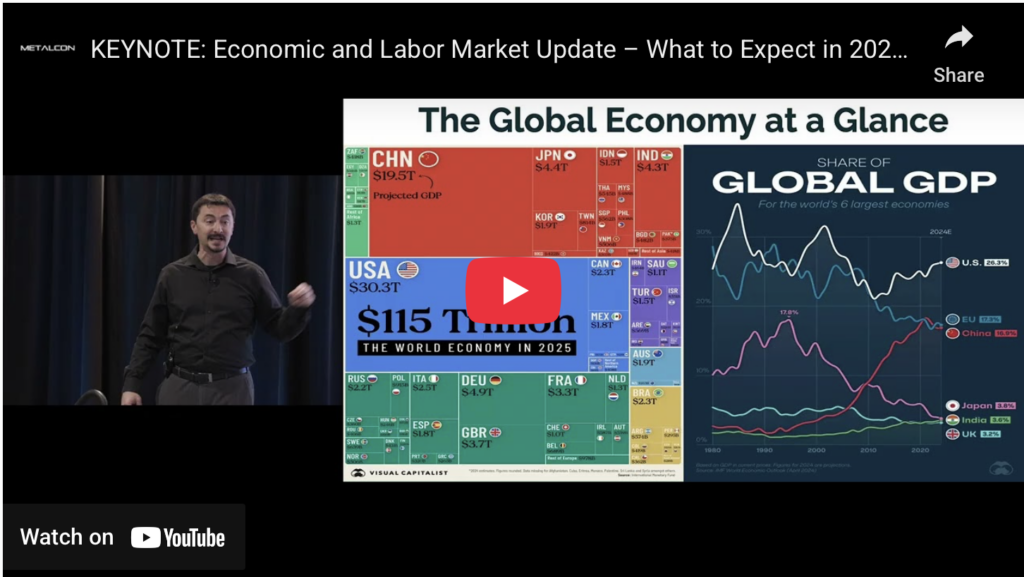
Professionals can also revisit the METALCON 2025 Keynote, “Economic and Labor Market Update – What to Expect in 2025 and Beyond,” which provides valuable perspective on broader market forces shaping construction demand, labor availability, and material costs.
Of course, the conversation continues in person at METALCON 2026, taking place October 7–9 in Orlando, Florida. With 275+ exhibitors from around the world, the event offers contractors, fabricators, architects, and suppliers the opportunity to explore new products, fabrication technologies, and sourcing strategies designed to help businesses stay competitive — even during periods of material volatility.
Because in today’s construction environment, staying ahead of the market is just as important as staying on schedule.

Industry insights for this article were informed in part by a conversation with Rob Haddock, founder and president of S-5!, a leading manufacturer of engineered metal roof attachment solutions and premier provider in the metal construction industry, with a focus on quality, safety, and innovation. Rob has been a key presenter sharing his insights at METALCON for decades – catch him this October at METALCON 2026!