How Prefabrication Cuts Build Time and Protects Margins
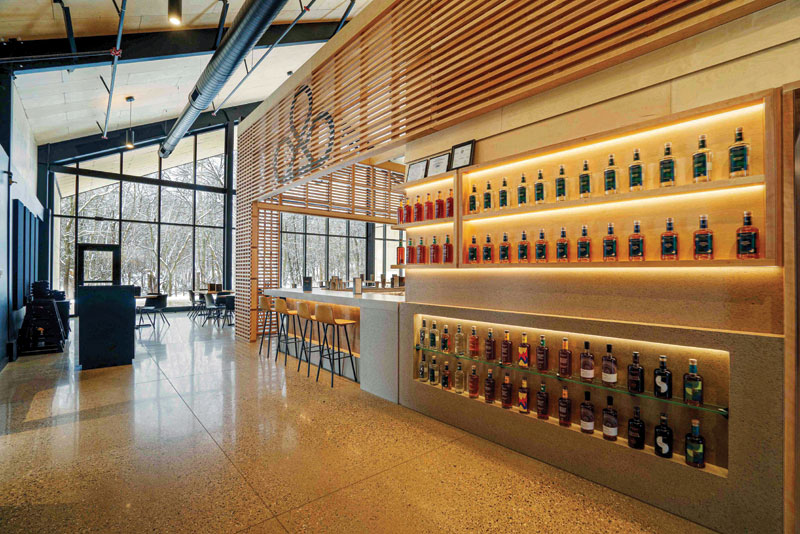
Eastern Kille Distillery, Rockford, Mich.; Case study of how simple architectural planning arrangements allowed this PEMB structure to perform well above its typical functional performance. Credit: Metal Construction News
Prefabricated metal building systems are helping contractors shorten project timelines, make better use of limited labor, and improve control over project costs. By moving much of the fabrication process off-site, contractors can manufacture building components while site work is underway, creating a more streamlined path from fabrication to installation.
As owners increasingly expect faster project delivery and greater certainty, prefabrication is becoming more than a construction method. It is a business strategy for improving project execution and staying competitive.
What Are Prefabricated Metal Building Systems?
Prefabricated metal building systems — also known as Pre-Engineered Metal Buildings (PEMBs) — are structures designed, engineered, and manufactured off-site before being delivered to the jobsite for assembly. Components arrive engineered and prepared for installation, reducing the amount of cutting, welding, and fabrication required in the field.
One of the biggest advantages of prefabrication is that manufacturing and site work can happen at the same time. While foundations and site preparation are underway, structural components can already be in production. This parallel approach can help compress overall project timelines, improve coordination between manufacturing and field operations, and keep construction moving from one phase to the next.
Used across a wide range of commercial, agricultural, institutional, and recreational applications, prefabricated metal building systems give contractors and owners a way to streamline project delivery while maintaining the durability and flexibility of metal construction.
Why Prefabrication Matters in Today’s Construction Market
Today’s construction environment demands more than simply completing projects — it requires delivering them efficiently, predictably, and profitably. Labor shortages, compressed schedules, rising costs, and increasing client expectations leave little room for unexpected delays, rework, or wasted labor.
For contractors, that makes the ability to control what happens on the jobsite increasingly important. Prefabrication reduces the amount of work that must be completed in the field, helping contractors streamline operations, make better use of available labor, and manage project costs with greater confidence.
How Off-Site Fabrication Reduces Construction Delays
Moving fabrication off the jobsite helps contractors reduce many of the variables that can slow projects and increase costs. By completing critical fabrication work before components arrive at the site, crews can spend more time installing and less time working through the challenges of field fabrication.
Weather has less impact on production. Structural components are manufactured indoors, allowing fabrication to continue regardless of rain, snow, or other jobsite conditions. This keeps production moving even when site conditions create delays elsewhere on the project.
Field fabrication and rework are minimized. Columns, beams, roof panels, and wall systems arrive pre-engineered, pre-cut, and ready for installation. Reducing on-site cutting, welding, and adjustments can minimize errors, material waste, and costly rework.
Project coordination becomes more efficient. With components manufactured to precise specifications and delivered as a coordinated building package, contractors can better align material deliveries, subcontractor schedules, and installation activities. Fewer fabrication tasks on-site can help crews move more smoothly from one phase of construction to the next.
Schedules become more reliable. By reducing weather-related interruptions, field fabrication, rework, and coordination challenges, prefabrication helps create a more consistent workflow from groundbreaking to completion. The result is greater control over project timelines and a stronger ability to deliver work on schedule and within budget.
Case Study: Post-Wildfire Rebuild in Pacific Palisades
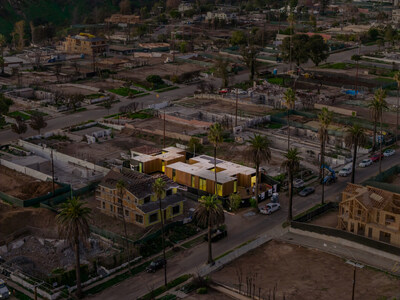
First Ground Up Pacific Palisades Fire Rebuild for a Homeowner, built by Cover.
After the devastating 2025 wildfire in California’s Pacific Palisades, one homeowner chose a prefabricated steel building system to rebuild a residence destroyed in the fire. According to Metal Architecture, the project became the first completed residential rebuild in the neighborhood, thanks in part to the speed of off-site fabrication and streamlined installation.
The project demonstrates how prefabricated steel systems can shorten rebuilding timelines while meeting rigorous fire, seismic, and energy requirements — an increasingly valuable advantage for communities rebuilding after natural disasters. Los Angeles-based design firm, Cover, handled the entire process, using non-combustible steel panels fabricated in its factory and assembled on-site.
How Prefabrication Improves Labor Efficiency and Helps Protect Profit Margins
For today’s contractors, rising material prices aren’t the only threat to profitability. Margins can also be squeezed by hidden costs that accumulate throughout a project—extended schedules, overtime, rework, idle crews, weather delays, and subcontractor coordination issues.
Prefabrication helps reduce many of those pressures by allowing contractors to spend less time on field fabrication and more time on installation and project execution. With structural components engineered and prepared before they arrive on-site, crews can focus their skills where they add the most value.
Labor is used more efficiently. Installation crews can focus on assembly rather than cutting, welding, and modifying structural components in the field, helping contractors accomplish more with the workforce they have.
More efficient execution helps protect margins. Reducing rework, minimizing weather-related interruptions, and streamlining coordination can help control the hidden costs that erode profitability. When projects move more efficiently, contractors have greater control over labor, equipment, and other resources that contribute to the overall cost of delivery.
The potential cost savings can be significant. According to Metal Construction News, PEMBs typically offer 25–30% savings over traditional construction from a cost perspective. For contractors and owners alike, those savings can make prefabrication an increasingly attractive approach to managing project costs while meeting demands for faster, more efficient construction.
Why Prefabrication Is Becoming a Strategic Business Tool
The unpredictability facing today’s construction industry is not a short-term challenge. Ongoing geopolitical uncertainty, supply chain disruptions, labor constraints, and shifting material costs continue to create conditions that make project planning and cost control more difficult. At the same time, owners expect contractors to deliver projects faster and with greater certainty.
As METALCON has explored in articles on labor efficiency, construction productivity, and project risk, contractors are under increasing pressure to do more with the resources they have. Prefabrication offers one way to respond by moving more work into a controlled production process before materials reach the jobsite.
The business impact extends beyond a single project. More reliable project delivery can strengthen client relationships, support repeat business, and allow contractors to move crews and resources more quickly to the next job. In a market where conditions can change quickly, that flexibility can help contractors maintain momentum even when other variables are outside their control.
Prefabrication has evolved beyond a construction method. It is becoming a strategic business tool that can help contractors manage risk, adapt to market uncertainty, and maintain greater control over project delivery in an increasingly unpredictable construction environment.
Case Study: Advanced Manufacturing Expands PEMB Production
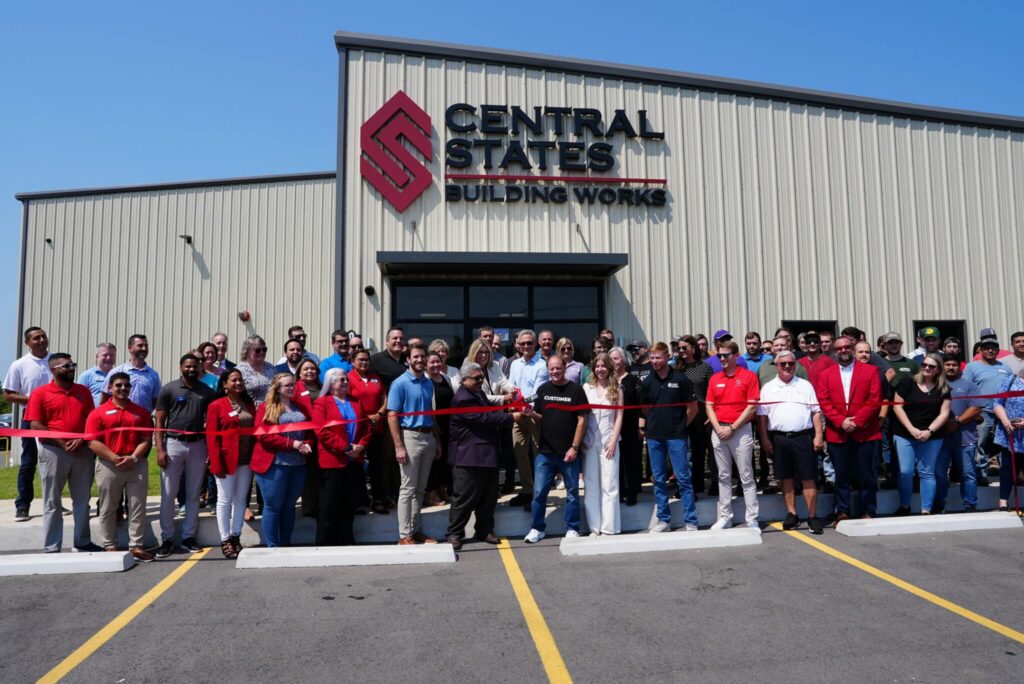
Investments like this reflect a broader industry trend: manufacturers are expanding automated fabrication capacity to help contractors access building systems more quickly while improving consistency and production quality.
To meet growing demand for pre-engineered metal buildings, Central States Inc. opened a 105,000-square-foot steel frame manufacturing plant in Springdale, Arkansas. The $24-million facility expands their automated fabrication capacity, helping streamline the production of PEMB building packages, reduce manufacturing bottlenecks, and improve delivery for contractors and developers relying on prefabricated systems. Source: Metal Construction News.
How Prefabrication Supports Faster Project Timelines and Earlier Project Turnover
In today’s construction market, speed has value beyond the jobsite. For owners, earlier project completion can mean earlier occupancy, faster revenue generation, and a quicker return on their investment. For contractors, completing projects on schedule allows crews and equipment to move to the next job while helping maintain cash flow and overall capacity.
Prefabrication can help compress project timelines by allowing manufacturing and site work to progress simultaneously. While foundations and site preparation are underway, structural components can already be in production. Once those components arrive at the jobsite, crews can move directly into installation, reducing downtime between phases of construction.
Shorter project timelines can also limit the costs associated with extended schedules, including equipment and carrying costs, weather exposure, and potential scheduling conflicts. For contractors, that can mean greater control over project resources from start to finish.
The value of faster delivery extends beyond completing a building sooner. It can help owners begin using their facilities sooner while giving contractors the ability to turn resources toward the next project. In an industry where time directly affects both project economics and client satisfaction, prefabrication can make faster, more reliable turnover a meaningful part of the overall project strategy.
Discover Faster Building Solutions at METALCON
The shift toward prefabrication is changing how contractors approach everything from labor and fabrication to project scheduling and delivery. At METALCON, contractors can explore the technologies and strategies helping make that shift possible — from prefabricated metal building systems and advanced automation to fabrication equipment and project delivery solutions.
Throughout the exhibit hall and education program, attendees can see the latest innovations in action, connect with manufacturers and industry experts, and gain practical insight into ways to improve productivity, manage labor challenges, and deliver projects more efficiently.
Whether you’re looking to streamline fabrication, make better use of your workforce, shorten project timelines, or improve project turnover, METALCON offers practical solutions to help you build smarter and move projects forward.
Join us October 7–9, 2026, in Orlando, Florida, and explore the technologies, expertise, and ideas shaping the future of metal construction. Register today.
How long do metal roofs last? Explore the factors that influence metal roof lifespan, from materials and installation to climate and maintenance, and what drives long-term performance and value.
METALCON has announced the winners of its sixth annual Top Products Awards, recognizing product innovations showcased at its 35th anniversary event, held Oct. 7–9 in Orlando, Florida. Products were evaluated through public electronic voting before the show and attendee voting onsite, giving metal construction industry professionals a voice in recognizing products, technologies and solutions designed to address the evolving needs of metal construction with improved performance, efficiency and installation The 2026 METALCON Top Products Award winners are: First Place Company:
From roofing and walls to software, accessories and more, explore the 2026 METALCON Top Product Awards nominees and the innovations shaping metal construction. See these products and more at METALCON next week, and don’t miss your last chance to vote for your favorite Top Product Awards picks.
Choosing ERP for a metal business starts with the work itself: how material arrives, how it moves through production and how an order becomes an invoice. A feature list can begin the conversation, but a walkthrough of your own process makes the evaluation more useful. 1 How does material keep its history Choose one coil, bundle or finished item and follow it through the demonstration. Ask which lot or serial details stay with it as it moves between receiving, storage
U.S. Steel is celebrating 125 years of steelmaking, innovation and American manufacturing in 2026. The milestone will be recognized as part of METALCON’s 35th anniversary, October 7-9 at the Orange County Convention Center in Orlando. As the largest international event in the metal construction and design industry, METALCON will recognize U.S. Steel’s longstanding role in the steel industry and the company’s continued focus on innovation for the future. At METALCON, U.S. Steel (booth 1077) is hosting Steel on the Move
In the metal construction industry, there is a certain pride that comes with doing things yourself. It’s the same mindset that has built successful businesses, solved difficult jobsite challenges, and helped contractors grow from small operations into thriving companies. That’s why it’s easy to understand the appeal of rolling your own metal panels. At first glance, it seems simple enough. Buy a machine, source the steel, bring production in-house, and eliminate a supplier from the equation. More control. More flexibility.
Welcome to METALCON 2026 METALCON takes place Oct. 7–9, 2026, at the Orange County Convention Center in Orlando, Florida, with pre-show workshops beginning Tuesday, Oct. 6. Celebrating its 35th anniversary, METALCON brings the entire metal construction ecosystem together in one place—from contractors, installers and fabricators to manufacturers, architects, engineers, specifiers, designers, suppliers, owners and developers. It is the industry’s annual business and education summit, bringing the metal construction community together to understand the forces shaping the market and see what
From thermal performance and evolving codes to cold-formed steel, automation and embodied carbon, explore six trends shaping metal construction and see where they’re headed at METALCON 2026.
Mill Steel is excited to announce our booth at METALCON 2026, the premier tradeshow dedicated exclusively to the metal construction and design industry. Taking place October 7–9, 2026, at the Orange County Convention Center in Orlando, Florida, METALCON brings together the full spectrum of builders, fabricators, architects, distributors, and innovators shaping the future of metal in construction. As one of North America’s leading metal distributors, Mill Steel will be on the show floor at Booth 1225 sharing insights, solutions, and
When you build out your fabrication shop, it often requires working with multiple suppliers. At MetalForming LLC, we break that pattern. With us, you don’t have to coordinate quotes from three different suppliers to build out your production line or navigate different support structures when something goes wrong. We partner with the world’s leading manufacturers in folding, cutting, coil processing, and rollforming, to give you A World of Possibilities. See our industry-leading lineup at METALCON 2026. Stop by booth 911