A metal roof is built to last, but its long-term performance depends on more than the panels themselves. The sealants used at seams, laps, fasteners and other critical details help protect against moisture intrusion, accommodate movement and maintain the integrity of the roofing system.
As we explored in our recent article on how long metal roofs last and what determines their lifespan, choosing the right materials and ensuring proper installation are key to long-term performance. Sealants are one important part of that equation.
Choosing the right metal roof sealant isn’t as simple as picking a product labeled for metal. Different applications require different properties, and the wrong sealant — or improper installation — can compromise performance and lead to premature maintenance or repairs. Read on to learn why sealant selection matters, seven tips to consider when choosing a product, the most common types of metal roof sealants, and where to find additional technical resources.
Why Is Choosing the Right Sealant Important for Metal Roofing?
First and foremost, follow the metal roofing system manufacturer’s recommendations when selecting a sealant. The Metal Construction Association’s (MCA) Technical Bulletin, Best Practices: Metal Building Sealant Types and Application Guidelines, emphasizes that the metal panel or building manufacturer’s and finish supplier’s recommendations should take precedence when choosing a product. If a specified sealant isn’t available or a particular brand isn’t required, MCA recommends comparing standardized test results to determine the most appropriate alternative.
Why is this so important? Metal roofs are exposed to a range of environmental stresses. Panels expand and contract as temperatures change, while roof joints and penetrations must withstand rain, wind, ultraviolet (UV) radiation and other weather conditions. The sealant must be compatible with the materials being joined and capable of accommodating the movement and exposure expected in that application.
Although sealants represent a relatively small portion of a roofing project’s overall cost, proper selection and application are critical to the long-term performance of metal roof and wall components. Getting it right from the start can help avoid costly repairs or replacement down the road.
How to Choose the Best Metal Roof Sealant
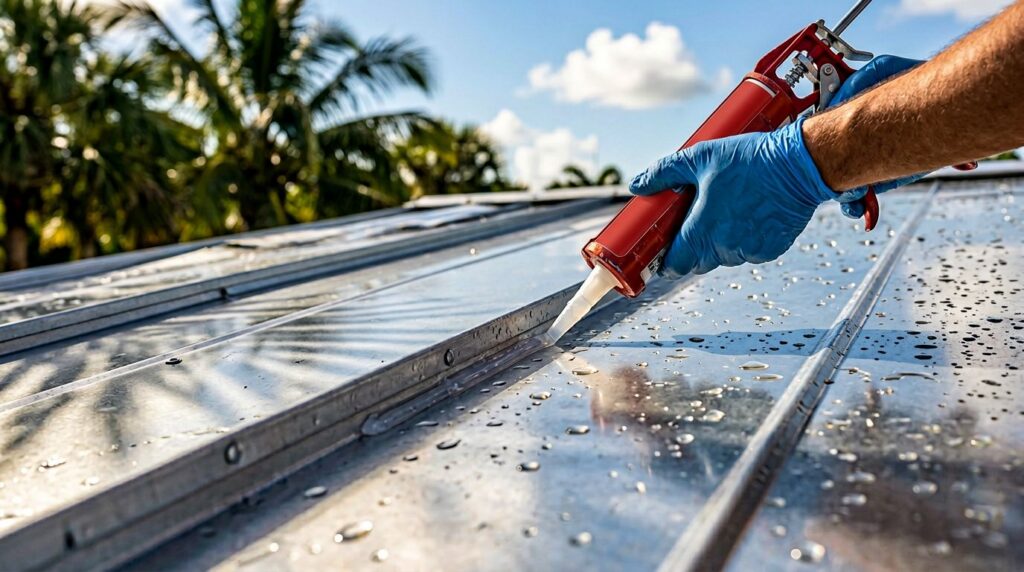
1. Review the Specifications Before You Shop
Before comparing products, pull the installation guidelines and specifications for your roofing system and note which sealants are called out for which details. Some manufacturers require specific products or brands, while others allow alternatives that meet certain performance criteria. If you’re considering something other than what’s recommended, getting the roof manufacturer’s approval first to avoid joint failure or a compromised warranty.
2. Start With Where the Sealant Will Go
Concealed panel seams, end laps, fasteners, flashing, roof penetrations and gutters each place different demands on a sealant. Some details call for preformed sealant tapes, while others call for liquid-applied products. Match the product to the joint’s design and function, since no single sealant is right for every part of the roof.
3. Check Compatibility With Metal and Other Materials
A sealant must adhere to the specific metal substrate and its finish without adversely affecting adjacent materials. Consider factory-applied coatings, flashing, insulation and other components that may come into contact with the product.
Compatibility also applies between sealants. For example, according to the MCA guidelines, silicone is generally not compatible with butyl, while polyurethane generally is. MCA also notes that some silicones can cause bare metals like Galvalume to rust, and recommends neutral-cure products designed for metal construction. Some metal coatings may need a primer or pretreatment, so when compatibility is uncertain, consult the sealant manufacturer.
4. Account for Thermal Movement
Metal panels expand and contract as temperatures fluctuate, causing movement at seams and joints. The sealant used in these areas must be flexible enough to accommodate that movement while maintaining adhesion and a reliable seal over time. Joint design and proper installation are equally important, as even a high-performing sealant can’t compensate for an improperly designed or installed joint.
5. Consider Weather and Exposure Conditions
Will the sealant be exposed to direct sunlight, standing water, moisture, freeze-thaw cycles or extreme temperatures? These conditions can affect performance over time and should be considered when selecting a product.
Check the manufacturer’s technical data to understand how the sealant performs under different environmental conditions. Look for information about UV resistance, weatherability and the range of temperatures the product can withstand. Keep in mind that a sealant designed for a concealed panel seam may not offer the same protection needed for an exposed roof detail.
6. Follow Application and Curing Requirements
Even the right sealant can fail if it’s applied incorrectly. Following the manufacturer’s instructions for surface preparation, application temperature, bead size, curing time and any required primers is essential to achieving the intended performance.
MCA’s guidance emphasizes that surfaces be clean and thoroughly dry. Manufacturing lubricants can leave residue on panels, and even a small amount of moisture can compromise a joint’s performance over its life. More sealant isn’t always better, since excess can cause separation and buckling of the materials being joined.
7. Compare Performance Data, Not Just Price
Sealants are a relatively small part of a roofing project’s overall cost, but poor selection can lead to expensive repairs. When comparing products, it is recommended to look at results from standardized test methods (such as ASTM, UL and AAMA) rather than proprietary test data, which can make comparisons difficult. It also suggests working with a sealant manufacturer that has an established history in the metal construction industry. Consider expected performance, compatibility, installation requirements and warranty conditions, not just the initial purchase price.
Common Types of Metal Roof Sealants
Several types of sealants are used in metal roofing, each with different properties and applications. This overview draws on MCA’s technical bulletin and Dan Garnett’s METALCON Online webinar, Sealant and Adhesive Technology for Metal Construction Applications. Ratings can vary by source, product formulation and application, so the roofing system manufacturer’s recommendations and the product’s technical data should always guide the final selection.
Butyl Sealants
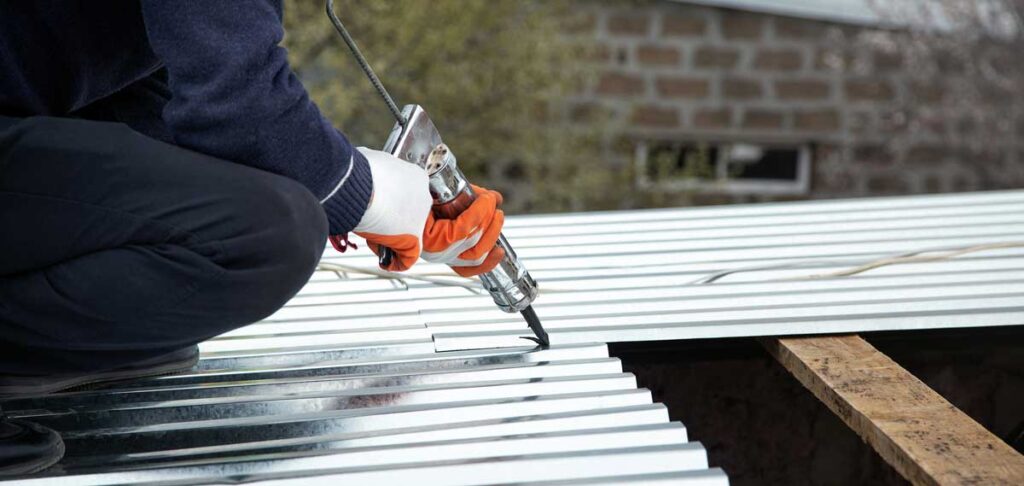
Butyl sealants are commonly used in concealed applications such as panel seams, end laps and overlapping connections. Available in tape and pumpable tube grades, they work with a wide variety of substrates and generally stay flexible and tacky over time. According to MCA, butyl isn’t a topical sealant. A small exposure at the end of a lap is acceptable, but prolonged sunlight can degrade it, so it shouldn’t be used where most of the material is exposed. It also shouldn’t be painted, and because it softens in heat and stiffens in cold, application temperature matters.
Silicone Sealants
Silicone sealants adhere to a wide variety of substrates and finishes. In Garnett’s webinar, silicone is rated excellent for both UV resistance and elastic recovery, making it a good option for many exposed exterior applications. Most silicones can’t be painted, and some may stain surrounding surfaces over time, so appearance and compatibility with adjacent materials should be considered. MCA advises using only neutral-cure silicones designed for metal construction.
Polyurethane Sealants
Polyurethane sealants offer good adhesion and elastic recovery, and most can be painted, which makes them suitable for many exposed applications. UV resistance is an area where sources differ: Garnett’s webinar rates it low to moderate, while MCA’s bulletin lists it as excellent. That’s a good reminder to check the technical data for the specific product and exposure. MCA also advises using polyurethanes designed specifically for metal.
Hybrid Sealants
Hybrid sealants combine properties of different sealant technologies. In Garnett’s webinar, for example, hybrids are rated good for both UV resistance and elastic recovery, and they’re paintable. Performance varies by formulation, so check the product’s technical data to confirm it’s appropriate for the intended application.
The Bottom Line: Choose the Right Sealant for the Application
The best metal roof sealant isn’t necessarily the most expensive or the most versatile. It’s the one that’s right for the application, compatible with the materials and installed according to the manufacturer’s specifications. Taking the time to make the right choice can help protect the roof’s integrity and support long-term performance.
For more technical guidance, explore the Metal Construction Association’s Best Practices: Metal Building Sealant Types and Application Guidelines. You can also find a wealth of industry knowledge through METALCON’s blogs and METALCON Online webinars, covering products, technologies and best practices across metal construction.
And if you’d like to connect directly with manufacturers and suppliers, make plans to attend METALCON 2027, October 26–28 in Louisville, Kentucky. The show brings together companies specializing in sealant tapes, caulks, closures and adhesives, giving you the opportunity to explore products, ask questions and make valuable connections. Sign up to receive show updates.