Building envelope failures are among the costliest problems in commercial construction. What begins as a small air leak, improperly sealed penetration, or poorly detailed transition can quickly lead to water intrusion, mold growth, corrosion, energy loss, occupant complaints, expensive repairs, warranty claims, and even litigation.
As commercial buildings become more energy efficient and performance standards continue to rise, architects, contractors, and manufacturers are placing greater emphasis on designing and installing building envelopes that perform as complete systems — not as individual components.
Understanding where failures occur — and how to prevent them — can save project teams millions over the life of a building.
What Is a Building Envelope and Why Does It Matter?
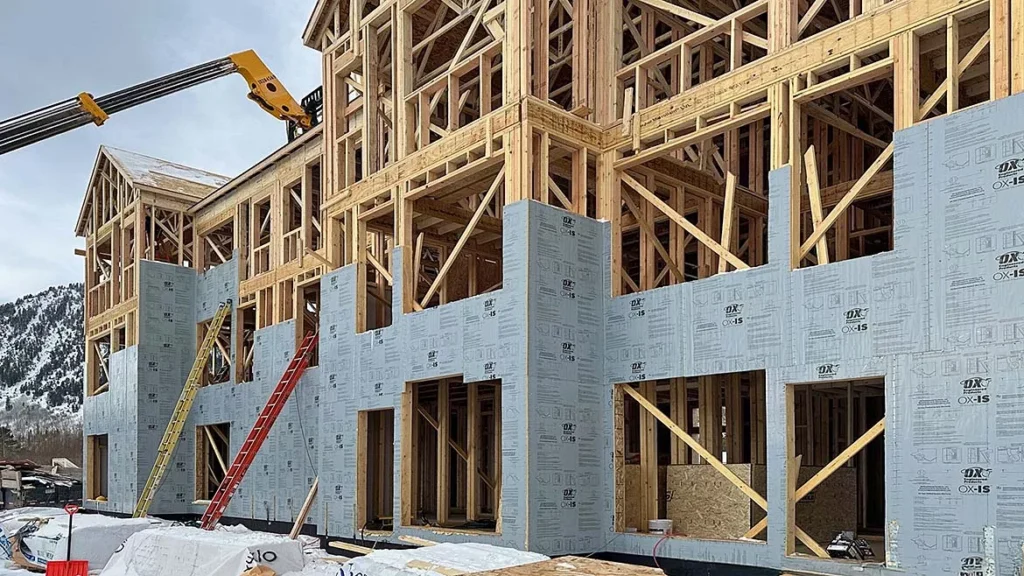
The building envelope is the physical barrier that separates a building’s conditioned interior from the outside environment. It includes the roof, exterior walls, insulation, air barriers, vapor retarders, flashing, sealants, windows, doors and all the transitions that connect these systems.
Together, these components control four critical elements:
- Water
- Air
- Heat
- Vapor
The key word is together.
A high-performing building envelope depends on how every component works as part of an integrated system — not how each product performs individually. Even the highest-quality roofing panels or insulation cannot compensate for poorly detailed transitions or improperly sealed penetrations.
Twenty years ago, buildings leaked more air, which (ironically) allowed moisture to dry more easily. Today’s buildings are designed to be much tighter for energy efficiency, meaning small installation errors can have much bigger consequences. (Modern Building Envelope)
Today’s commercial buildings are expected to meet higher standards for energy efficiency, airtightness and occupant comfort than ever before. As a result, building envelope systems have become increasingly sophisticated — and far less forgiving. A missing flashing detail, improperly sealed penetration or discontinuous air barrier can disrupt the performance of the entire assembly.
The Most Common Causes of Building Envelope Failures
Contrary to popular belief, most envelope failures aren’t caused by defective materials. They typically occur where systems intersect and responsibilities overlap.
Common causes include:
- Poor coordination between roofing, wall and insulation systems
- Improperly installed flashing and sealants
- Inadequate air and vapor barrier continuity
- Unsealed penetrations for mechanical, electrical and plumbing systems
- Thermal bridging at structural connections
- Field modifications that deviate from manufacturer recommendations
- Design or material substitutions that unintentionally affect moisture or thermal performance
Even seemingly minor changes made to reduce costs or simplify construction can alter drainage paths, create condensation risks or interrupt the continuity of the air barrier. Those impacts may not become apparent until months — or even years — after the building is occupied.
That’s why many project teams are shifting their focus from individual products to the performance of the complete enclosure.
How Water Intrusion Impacts Building Performance
Water is one of the most destructive forces affecting commercial buildings — not simply because it causes visible damage, but because it can quietly compromise multiple building systems before problems become apparent.
Moisture trapped within wall or roof assemblies can:
- Reduce insulation performance
- Accelerate corrosion of metal components
- Promote mold and microbial growth
- Increase heating and cooling costs
- Damage interior finishes
- Shorten the service life of building materials
For owners, the financial impact often extends beyond repair costs. Occupant disruption, lost productivity, insurance claims and reputational damage can make envelope failures significantly more expensive than the initial construction issue that caused them.
Preventing water intrusion begins with designing and installing continuous air, water and thermal control layers that work together as a unified system.
Designing for Performance: Best Practices for Building Envelope Success
Creating a durable, high-performing building envelope requires more than selecting quality materials. It demands thoughtful planning, collaboration and disciplined execution throughout every stage of a project. By treating the building envelope as a complete system — from design through installation — project teams can reduce risk, improve building performance and avoid costly failures.
Coordinate Early, Build Better
Many building envelope failures can be traced back to decisions made long before construction begins. Early collaboration helps architects, contractors, manufacturers and building-envelope specialists identify potential issues before they become expensive field fixes.
Successful coordination helps project teams:
- Maintain continuous air and water barriers
- Resolve roof-to-wall transition details
- Coordinate penetrations before fabrication
- Minimize thermal bridging
- Clarify responsibilities between trades
- Reduce costly field modifications and rework
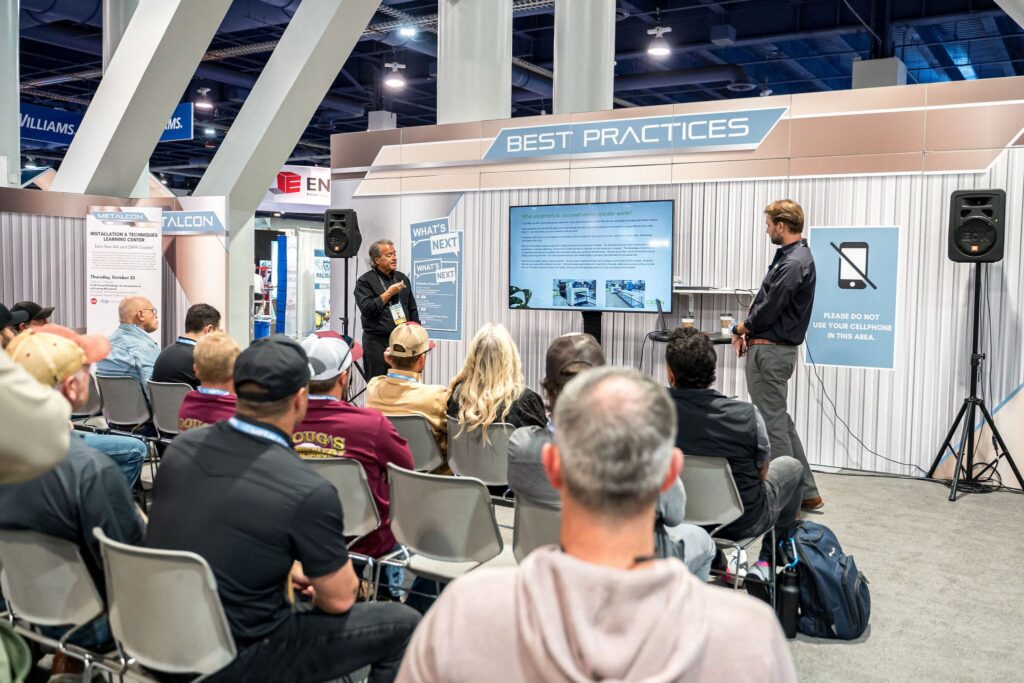
These same principles were explored during METALCON’s ONLINE webinar, “Sealing the Envelope: Air, Vapor, & Thermal Barrier Solutions for Metal Buildings,“ which examined how properly coordinated control layers improve both energy performance and moisture management. Because building envelope performance depends on how multiple systems work together, there’s tremendous value in learning alongside the entire metal construction ecosystem. METALCON provides that opportunity by bringing together architects, contractors, manufacturers, engineers and suppliers to explore integrated solutions, exchange best practices and strengthen the collaboration that leads to higher-performing, more resilient buildings.
Focus on Quality Throughout Construction
Even the best building envelope design depends on proper execution in the field. Successful project teams reinforce design intent through communication, quality assurance and ongoing inspection throughout construction.
Best practices include:
- Conducting pre-installation coordination meetings
- Building and evaluating mock-ups before full installation
- Inspecting flashing, sealants and critical transitions throughout construction
- Following manufacturer installation guidelines
- Verifying performance through field testing and commissioning, when appropriate
These preventive measures help identify problems early — when they are far less expensive to correct.ct.
Think Beyond First Cost
As commercial buildings become more sophisticated, many owners are shifting their focus from minimizing upfront construction costs to maximizing long-term building performance.
The benefits of a high-performing building envelope extend well beyond preventing water intrusion and reducing maintenance costs. According to the U.S. Department of Energy’s Better Buildings Solution Center, the building envelope accounts for approximately 30% of the primary energy consumed in commercial buildings, underscoring how decisions about insulation, glazing and air sealing can significantly influence heating and cooling demand.
Investments in a well-designed, properly installed building envelope often pay dividends through lower maintenance costs, improved energy efficiency, greater durability and fewer warranty claims over the life of the building. When project teams prioritize performance instead of simply choosing the lowest initial cost, they help create buildings that are more resilient, more efficient and better equipped to meet the demands of today’s commercial environment.
Discover Building Envelope Innovations at METALCON
As building envelope performance becomes increasingly important, METALCON continues to expand its education for architects, contractors, engineers and building professionals looking to stay ahead of evolving technologies and best practices.

This year’s program includes sessions such as Reflective Insulation & Radiant Barriers in Metal Building Design: Solving Real-World Thermal, Moisture, and Energy Challenges, which explores strategies for improving thermal efficiency while managing moisture in metal building systems. Attendees can also participate in the MasterClass: Preventing Failures in Roofing and Wall Systems: Evaluating Antimicrobial Performance in Building Materials, offering practical insights into reducing moisture-related risks and improving long-term building performance.
Beyond the classroom, METALCON gives attendees the opportunity to connect directly with the manufacturers, engineers, contractors and suppliers developing the products and systems that shape today’s high-performance building envelopes. By bringing together the entire metal construction ecosystem under one roof, the event makes it easier to compare solutions, ask technical questions and better understand how individual components work together as a complete system.
Whether you’re evaluating new materials, refining design details or looking for ways to improve installation practices, METALCON provides the knowledge, connections and hands-on experience to help turn thoughtful planning into better-performing buildings. REGISTER TODAY for METALCON 2026, October 7 – 9, 2026 in Orlando, Florida.