High-performance buildings don’t happen by accident — they depend on fabricators who can turn advanced materials, precise engineering and integrated building systems into assemblies that perform as designed.
Fabricators are no longer simply producing components from project specifications. As performance requirements move earlier into the design conversation, they’re increasingly responsible for making sure insulation, air barriers, roofing, coatings and thermal breaks actually work together as a single system — not just as a set of parts.
In this latest installment of the Beyond the Roof series, we look at how fabricators are helping drive the shift toward high-performance, energy-efficient construction — and why their expertise is becoming increasingly essential to delivering buildings that perform better from day one and well into the future.
Why “Envelope-First” Design Is Changing What Fabricators Are Asked to Deliver
For years, building design followed a familiar sequence: aesthetics first, performance second. That approach is quickly becoming outdated.
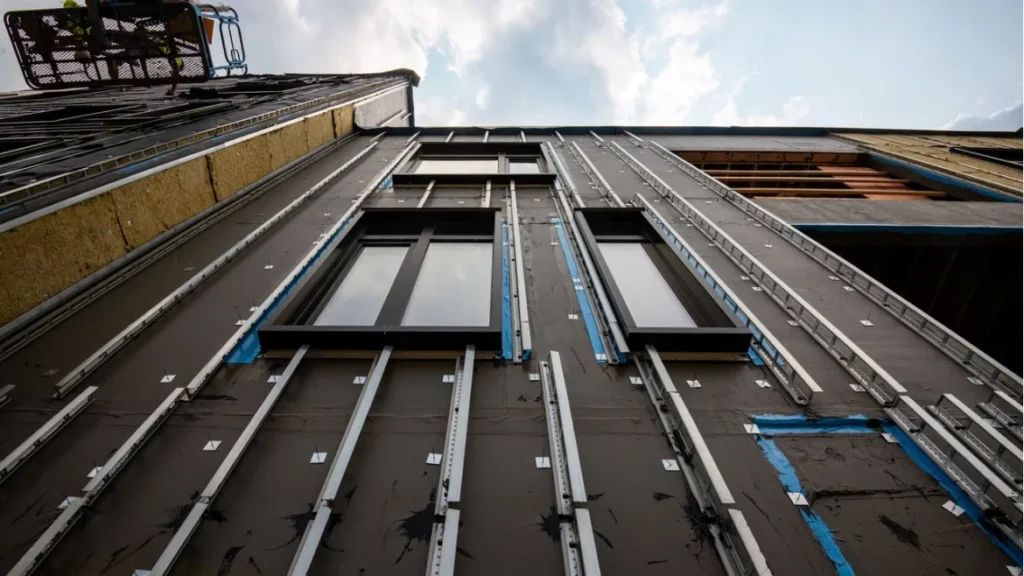
As Building Enclosure notes, “the architectural design process often followed a predictable hierarchy: form first, physics second.” Today, that hierarchy is shifting toward an envelope-first approach, where thermal performance, energy efficiency and code compliance are considered from the start.
That shift has real implications in the fabrication shop. When performance requirements are locked in earlier, fabricators have more room to weigh in on materials, tolerances and system integration before a design is finalized — rather than reacting to specifications after the fact. Metal building systems are well suited to this shift because they’re engineered as integrated assemblies rather than a collection of disconnected components, which means the fabricator’s input on how insulation, framing, panels and roofing come together can meaningfully shape how well the finished envelope performs.
How Metal Building Systems Deliver on That Shift
Metal building systems are designed as complete envelope solutions — not just structural frames. When these systems are properly designed, fabricated and assembled, they can help create tighter, better-insulated building envelopes that reduce energy use and improve long-term performance.
Modern metal building systems address thermal bridging through continuous insulation, thermal breaks and “warm wall” designs that position framing inside the insulation layer. A 2020 MBMA-sponsored analysis published in Architectural Record makes the point directly: the performance of the overall assembly — not simply the R-value of the insulation — depends on factors like insulation continuity, joints, compression and thermal bridges. For fabricators, that’s exactly where precision and coordination pay off, since it’s the details of how components are made and fitted together that determine whether the design intent survives contact with the field.
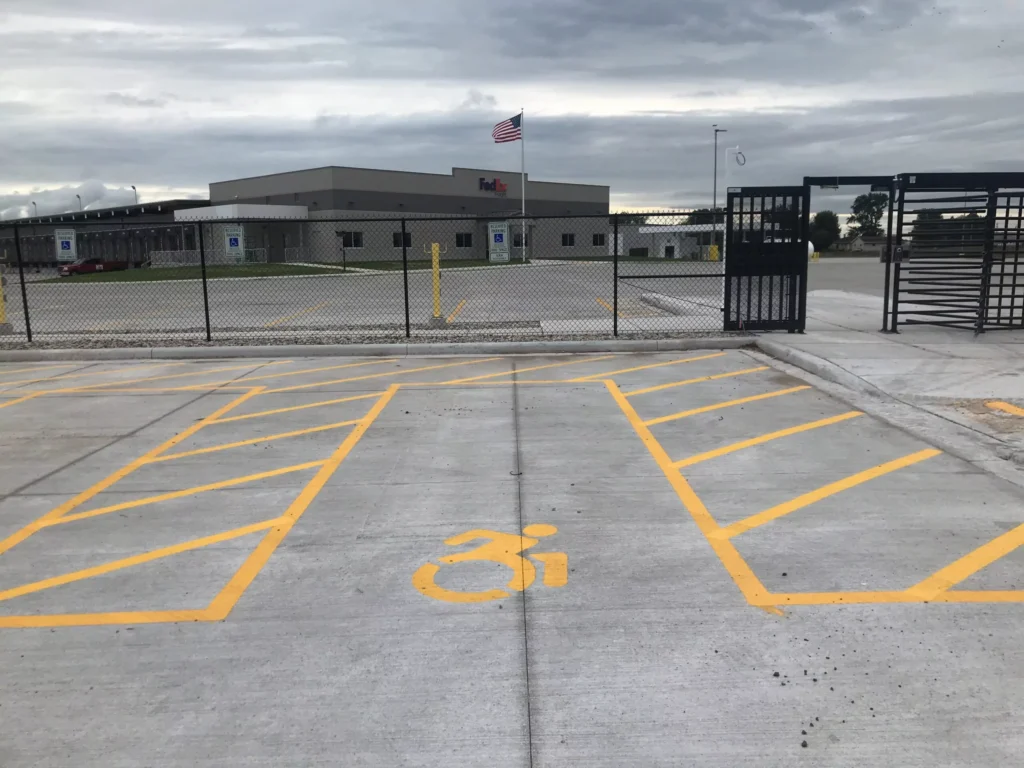
A real-world example shows the potential impact. The FedEx Freight facility in Green Bay, Wisconsin, incorporated a pre-engineered metal building along with energy-efficient systems and materials, achieving a 45.6% reduction in energy costs compared with the baseline design. According to Paladin Engineers, the project’s sustainability and materials strategy — including the choice of a pre-engineered metal building system — helped avoid more than 10,325 metric tons of carbon dioxide equivalent (MtCO2e).
That kind of result doesn’t come from selecting the right materials alone. It depends on how the building envelope is designed, coordinated, fabricated and assembled from the start.
Insulation: Where Fabrication Detail Becomes Building Performance
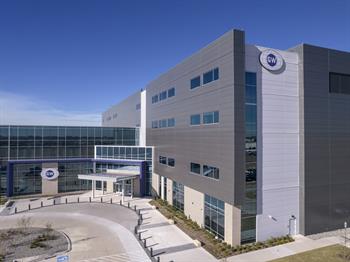
Insulation plays a critical role in the energy performance of a metal building. But achieving the best results takes more than selecting a high R-value — the insulation has to work in concert with the framing, panels, air barriers and other components of the building envelope.
Steel structures support a wide range of insulation solutions, including fiberglass, rigid board, spray foam and insulated metal panels. The right combination depends on the building design, climate, energy requirements and overall performance goals. As Buildway notes, modern steel buildings, when properly insulated, can achieve thermal performance that meets or exceeds many energy-code requirements — with the right combination of materials and installation, steel structures can rival traditional construction in insulation efficiency.
Reflective insulation can further enhance efficiency by reducing radiant heat transfer and helping maintain stable interior temperatures year-round. Equally important, metal systems enable tighter air barriers and more precise sealing around penetrations. These details live or die on fabrication accuracy, since even a well-specified insulation package still underperforms if panel joints and connections don’t hold a tight seal.
Roofing is also one of the most impactful contributors to building energy performance, making material selection and system design important considerations for high-performance construction.
Reflective Roofing: Turning Solar Performance Into a Fabrication Detail
According to the American Iron and Steel Institute, the roof can have the greatest impact on a building’s overall energy use. Metal roofing systems can help reduce heat gain, particularly when paired with cool-roof coatings — these systems can achieve solar reflectance levels above 70%, helping reflect more of the sun’s energy and reduce cooling loads.
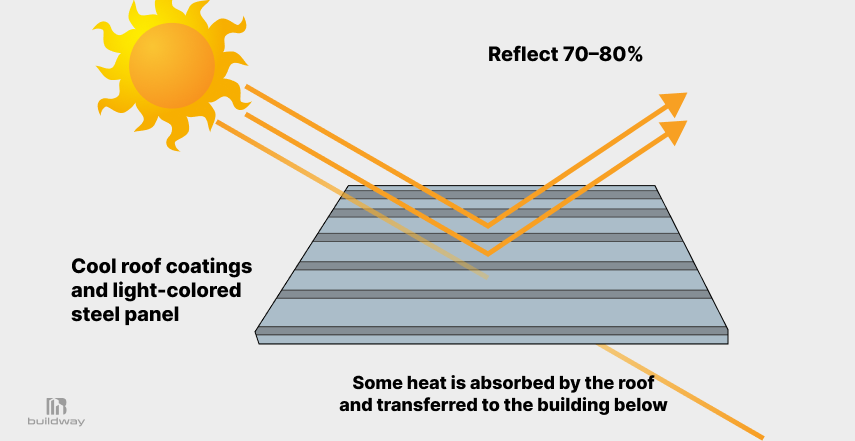
Reflective metal roofs can also offer high thermal emissivity, allowing absorbed heat to be released rather than retained. Together, reflectivity and emissivity can help stabilize interior temperatures and reduce the demand on HVAC systems. The materials, profiles, coatings and connections that make up a metal roofing system all contribute to how the finished assembly performs — which means fabrication is as much a part of a roof’s energy performance as the coating itself.
Metal roofing also supports renewable energy strategies. Standing seam systems provide an effective platform for photovoltaic installations, allowing solar panels to be attached without penetrating the roof surface. The durability and long service life of metal roofing can further support the long-term performance of rooftop solar systems and other energy technologies.
Why Steel Building Systems Support Green Building Standards
Sustainability is no longer optional — it’s a core project requirement. Metal building systems can support these goals across multiple fronts, from material selection and waste reduction to durability and end-of-life recyclability.
Fabricators influence material sourcing and procurement while also providing the documentation and tracking data needed to support green building certifications. According to Max Puchtel, AISC Director of Sustainability and Government Relations, in The Fabricator, “Fabrication itself accounts for less than 8% of structural steel’s cradle-to-gate carbon footprint, but a fabricator’s procurement responsibility means that their upstream influence is far greater.” Fabricators have significant influence over the environmental impact of the steel they source — largely through upstream sourcing decisions rather than the fabrication process itself.
Fabricators can also contribute to sustainability through material efficiency and waste reduction, more sustainable sourcing, efficient logistics and durable systems designed for long-term performance. Because steel can be recycled at the end of its useful life, these decisions can support a more circular approach to construction.
The growing importance of this role is reflected in the American Institute of Steel Construction’s Sustainability Partner Program, which provides structural steel fabricators with specialized training and resources to support sustainability-focused projects and identify opportunities to reduce their environmental impact.
How Fabrication Precision Supports Long-Term Building Performance
Every advantage described above — the tighter envelope, the insulation performance, the reflective roof, the sourcing decisions — depends on the same thing: components that are made accurately and assembled the way they were designed to be.
Thermal spacer blocks have to be sized to match the insulation depth they’re isolating. Panel joints have to be sealed consistently, not just specified. Connections between roofing, wall systems and structural framing have to close the gaps that a spec sheet can’t account for on its own. When fabricators get those details right, the building doesn’t just meet its design intent on paper — it holds up in daily performance, with fewer callbacks, lower utility bills and a smaller gap between what was promised and what gets delivered.
That gap is where fabricators earn their place in the conversation. Accurate dimensions, consistent connections and careful coordination reduce field modifications, installation issues and material waste, while directly protecting the energy performance the design team promised the owner. These are the kinds of details that increasingly require close collaboration among fabricators, architects and contractors from the start of a project. And these are exactly the kinds of conversations shaping what’s next in metal construction at METALCON this fall.
That’s the idea behind Beyond the Roof: the fabricator’s contribution doesn’t stop with the component — it shows up in how the whole building performs. By combining material knowledge, precision fabrication and system coordination, fabricators are helping architects, contractors and developers deliver buildings that perform better today — and continue to deliver value long into the future.
Explore Energy-Efficient Metal Building Systems at METALCON
The insulation and roofing details covered in this article will be the focus of two education sessions at METALCON 2026 in Orlando, October 7–9:
👉 Reflective Insulation & Radiant Barriers in Metal Building Design digs into how reflective insulation and radiant barrier systems address real-world thermal, moisture and condensation challenges in metal roofs, walls and HVAC applications. Speakers: Ceplast Metallized Products, rFOIL Insulation Products and MWI Components.
👉 What’s Cooler Than Cool? looks at cool roofs, cool walls, insulated metal panels and metal building systems as an integrated whole-building strategy. Speakers: Sherwin-Williams, the Cool Roof Ratings Council and Jacobs.
At METALCON 2026, fabricators, contractors, architects, manufacturers and other industry professionals come together to see what’s new, make connections and discover solutions that can shape the projects ahead.
4,000+ professionals • 250+ exhibitors • 3 days in Orlando
If you’re looking to stay ahead of where metal construction is going, this is where you need to be.