“Hey Rosie, answer the phone. I’m up on the roof.”
“Hey Rosie, take a message. I’m in the middle of a pour.”
“Hey Rosie, remind me to send that estimate when I get back.”
Sound familiar?
Rosie is just one of many automation platforms introduced to handle administrative tasks like these, and one example of a much bigger shift. Between managing projects, coordinating crews and keeping customers informed, finding time to improve operations is hard. Automation helps by taking routine work off your plate.
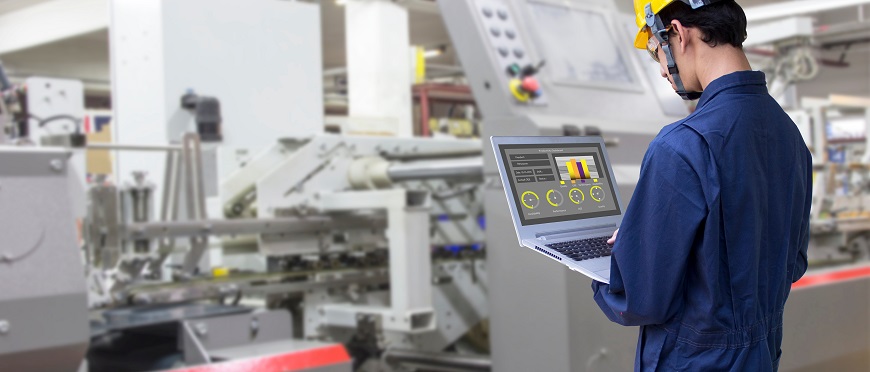
The goal isn’t to automate everything. It’s to find where technology makes the biggest difference and give your team more time for the work that matters.
To help you get started, this post draws on METALCON Online’s continuing education webinar, “Breaking Tradition: How Owner Operators Can Unlock Growth with Real Automation.” Presenter Greg Andrews of ABIS, Inc. shares practical examples from his years helping companies in the industry put automation to work.
Here’s what metal construction professionals should know about automation, its benefits and how to begin.
What Is Automation in the Construction Industry?
Automation means using technology, machinery and software to handle tasks that would otherwise take manual effort. It goes well beyond robots. Examples include:
Automated customer communication: AI answering services that handle calls, answer common questions and capture leads.

Automated fabrication equipment: CNC cutting, roll-forming lines and coil-handling systems that improve consistency and output.
Robotics and drones: Machines that take on repetitive or physically demanding work like welding and material handling, and drones that measure roofs and inspect hard-to-reach areas without anyone climbing up.
Construction software: Estimating, scheduling, purchasing and ERP tools that replace manual data entry and spreadsheets.
Simple workflow rules: No new platform required. For example, copy every quote you send to a dedicated email address and set a rule that puts a follow-up on the salesperson’s calendar three days later. Greg describes this as one of the easiest automations a business can set up.
Benefits of Automation
Construction businesses face ongoing challenges related to labor availability, productivity, project schedules and operating costs. Automation offers opportunities to address these challenges while helping businesses make better use of their existing resources.
1. Save Time and Money
Automation takes over repetitive work, so people spend less time on it. Greg Andrews shared an example of an employee who double-checks inventory usage reports where 19 out of 20 are correct. Automating the process that flags the one error frees roughly 95% of that person’s checking time.
Costs can add up quickly, too. One shop owner Greg spoke with was weighing a $150,000 robot that would replace an 8-hour manual job. With overhead, that’s roughly two years of one employee’s salary, and the employee could move to higher-value work.
2. Improve Quality and Consistency
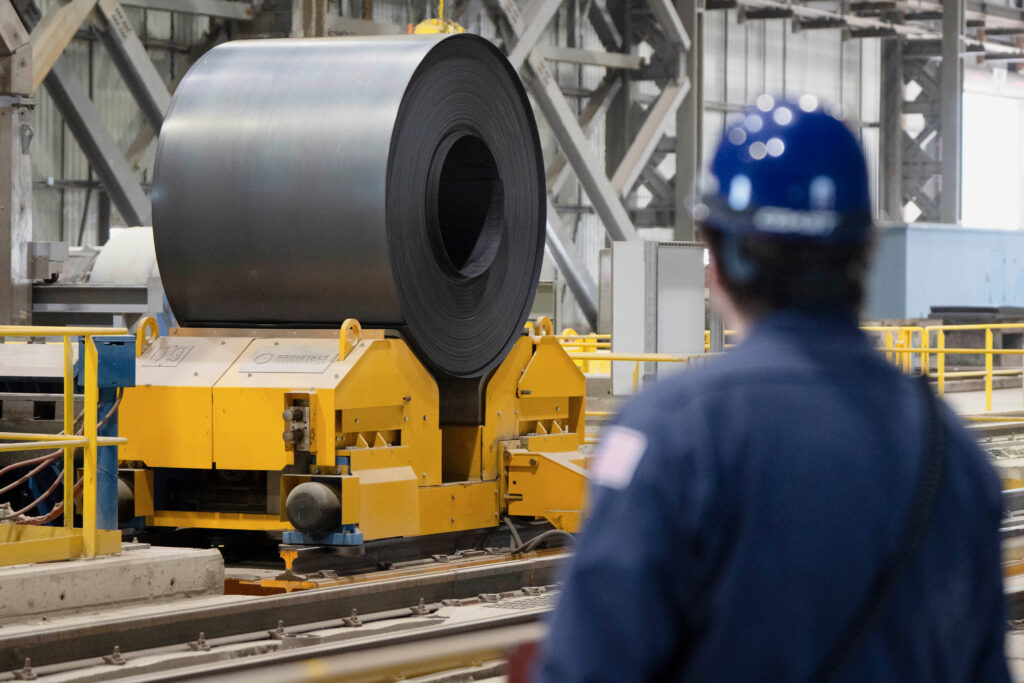
Automated cutting and roll-forming equipment repeats the same operation the same way every time, reducing variation and rework. Barcode scanning does the same for shipping. In one of Greg’s examples, a shop scanned 80 items onto a container against a customer order for 81. The scans gave everyone clear proof of where the miss happened and ended a blame game over costly expedited shipping.
3. Create Safer Jobsites and Make Better Use of Skilled People
Automated material handling and robotics reduce lifting and repetitive strain. Less repetitive and administrative work also lets experienced employees focus on estimating, quality control and oversight. It helps retention, too. Greg points out that busy work drives short-term turnover, which is the most expensive way to grow a team.
Steps to Incorporate Automation in Your Construction Business
The pace of automation is accelerating, bringing both opportunities and challenges to the construction industry. Businesses that want to remain competitive need to understand how these technologies can improve their operations and where to begin. A thoughtful approach helps identify priorities, evaluate options and bring employees along as new tools are introduced.
1. Find Your Bottlenecks
Where do employees spend hours on repetitive work? Which tasks require someone to re-enter the same information in multiple places? Instead of asking “What technology should we buy?” ask “What is slowing us down?”
Greg suggests another test: who can’t leave without the shop getting nervous? His example is a trim shop whose daily schedule lived in one veteran’s head and on a single pre-printed PDF. The employee had already retired twice and been talked out of it, because replacing that PDF was harder than convincing him to stay. If one person’s vacation puts you on edge, you’ve found a process worth capturing.

2. Start Small and Prioritize Practical Solutions
Choose repetitive, predictable processes that are easy to measure. A contractor might start with appointment reminders or quote follow-ups. A fabricator might automate one production step before investing in a whole new system. One growing company Greg worked with had four general managers each filling out five spreadsheets daily after hours, which someone then compiled and reviewed weekly. The fix was three automatic text messages at the end of each day, with no AI or expensive software involved.
3. Evaluate Technology Against Your Needs
Not every automation solution is right for every construction business. Before investing, ask:
- What specific problem will it solve?
- Will it integrate with existing equipment or software?
- How much time or labor could it realistically save?
- What are the upfront and ongoing costs?
- What training will employees need?
- How will we measure success?
Contractors who spend most of the day on jobsites might look at AI communication tools like Rosie, Jobber’s AI Receptionist or Smith.ai. Manufacturers and fabricators might look at ERP, estimating and shop-floor tracking tools.
4. Involve Your Employees and Provide Training
Employees will resist automation they think is aimed at replacing them. Greg suggests asking the people who work in a process for their top five complaints about it, then showing how the new tool addresses those complaints. The change becomes their improvement rather than something imposed on them. Training matters just as much, so people know how to use the tools and when human judgment still comes first.
5. Measure Results and Expand Gradually
Compare results to your original goals: time saved, error rates, material use, labor hours, response times and costs. If it’s working, expand. If not, look at the technology, the training or the rollout. Plan to revisit processes at least once a year, since automation is an ongoing effort rather than a one-time purchase. Greg even suggests a recurring automation meeting, which he says can eliminate three to five other weekly meetings.
Putting Automation to Work in Metal Construction
From automated fabrication and material handling to digital workflows that connect design, production and installation, the opportunities in metal construction keep growing. The challenge is knowing where to start.
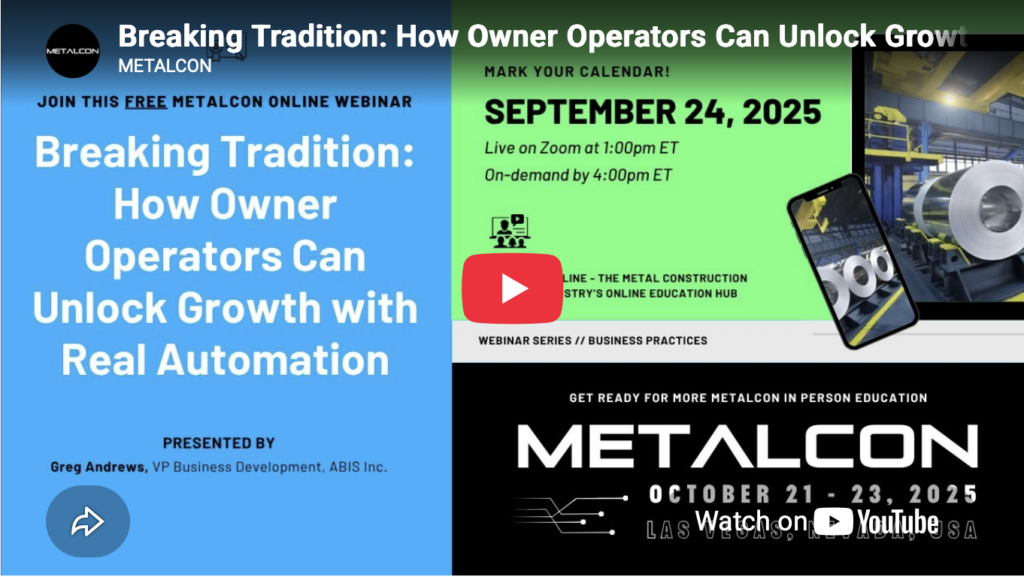
Want the full story? Watch Greg Andrews’s webinar for more on identifying shop-floor processes to automate, getting employees on board and learning from growing shops. His main point is that buying technology doesn’t automatically make a business better. Knowing your problem first does.
Automation isn’t about replacing the people who build this industry. It’s about giving them better tools.
Explore What’s Next at METALCON
Technology is a growing focus at METALCON, with education sessions on emerging technologies and exhibitors showing the latest equipment and innovations. Join us at METALCON 2027, October 26–28, at the Kentucky International Convention Center in Louisville, Kentucky.