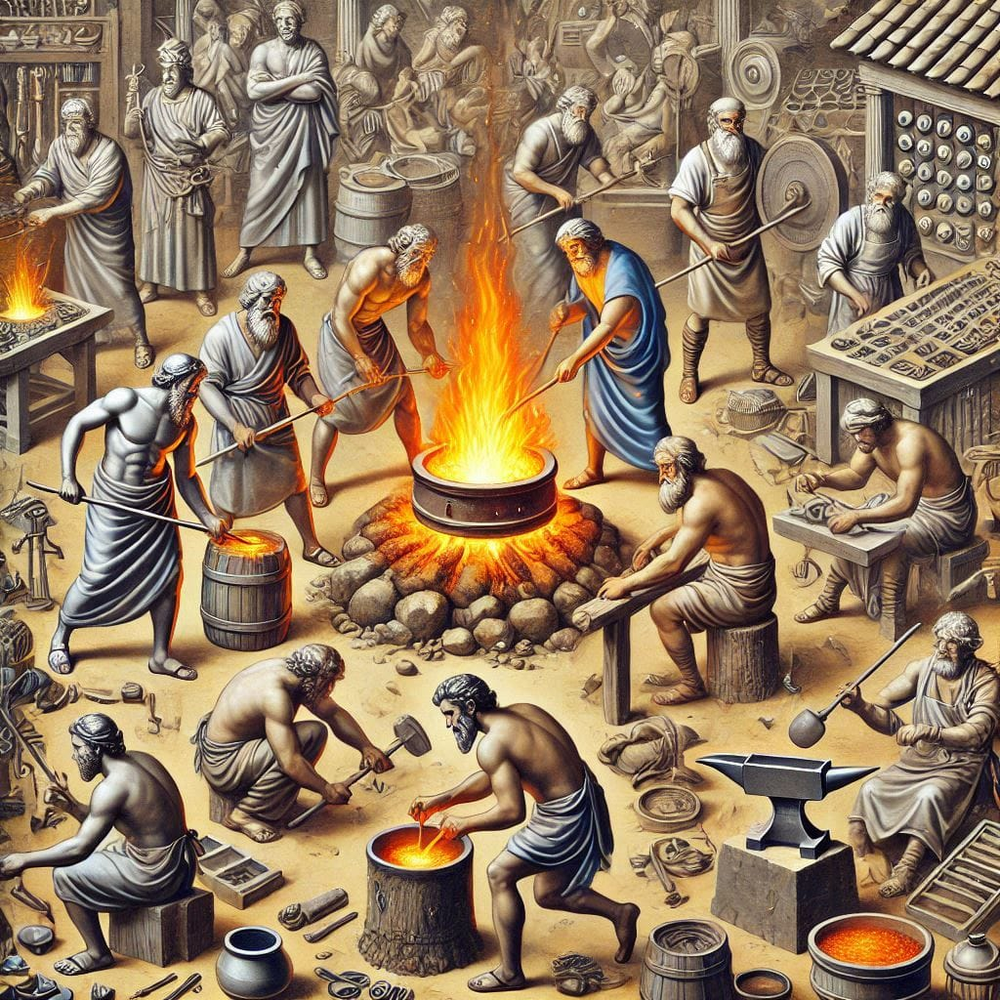
Ever wonder where modern metalworking really began?
🔥 Cue a group of early metalworkers gathered around a fire, turning over raw metal and asking the same question fabricators still ask today: how do we make this stronger, more useful, and more reliable?
Today’s metal construction industry is defined by automated fabrication, digital modeling, and precision cutting — technologies that allow for unprecedented accuracy, efficiency, and scale. But at its core, the goal hasn’t changed: shaping metal to perform exactly as intended.
Long before these advanced tools, early metalworkers were solving that same challenge.
Recent archaeological discoveries — particularly in ancient Egypt — are shedding new light on just how advanced those early innovations were. And while separated by thousands of years, the principles behind ancient metallurgy still echo in modern metal construction today.
What Recent Discoveries Reveal About Ancient Metallurgy Techniques
The origins of metalworking trace back to the Neolithic period, around 8,000 BCE, when early humans first encountered native metals like gold and copper in their natural state.
According to reporting from The Debrief on recent archaeological findings, new evidence from Egypt’s Middle Kingdom (circa 2050–1710 BCE) suggests that ancient metallurgists weren’t simply melting and casting metal — they were intentionally controlling composition, temperature, and process to achieve specific material properties.
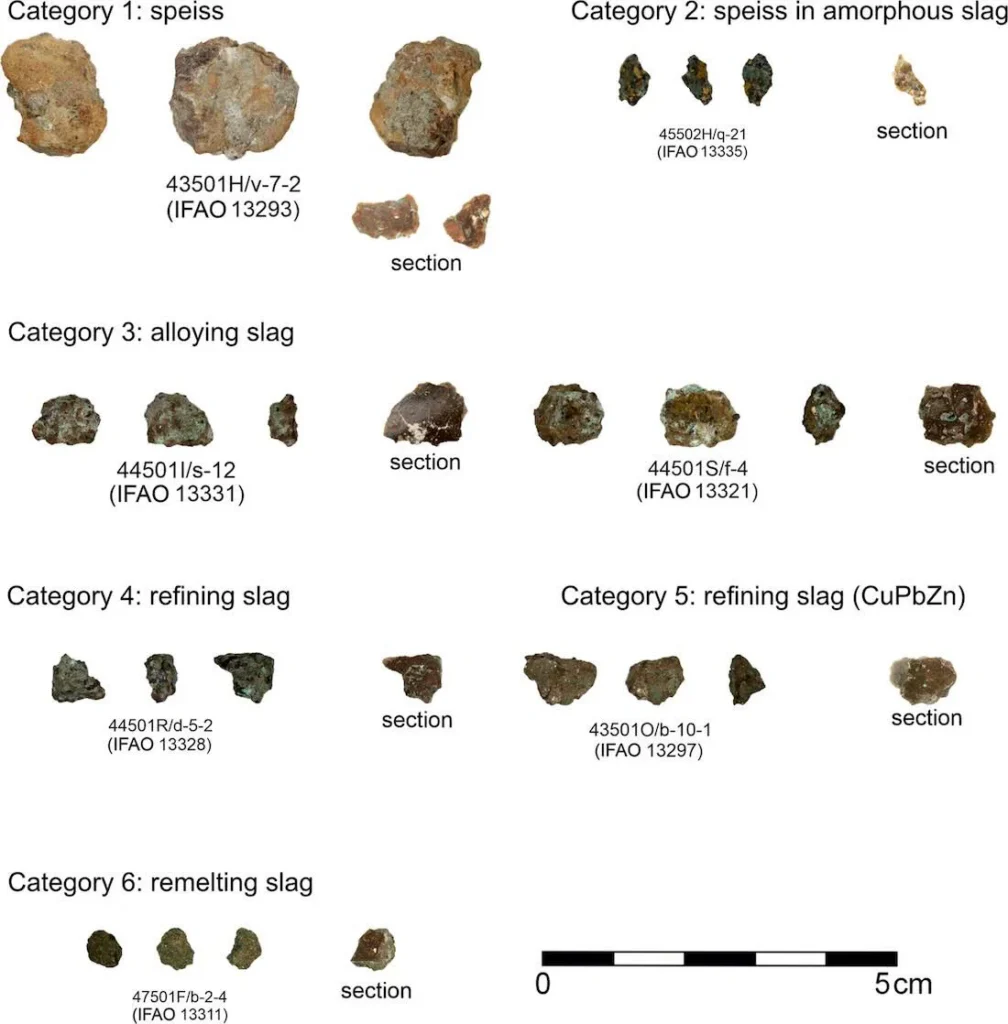
Researchers identified a material known as speiss — a complex mixture of metals — pointing to a level of experimentation and material control more advanced than previously understood.
These findings point to a sophisticated understanding of:
- Alloying different metals to improve strength and durability
- Managing heat to influence hardness and workability
- Refining raw materials to reduce impurities
In other words, ancient craftspeople were already thinking like modern fabricators — optimizing inputs and processes to achieve consistent, high-performing results.
How Ancient Metal Alloys Compare to Modern Construction Materials
At first glance, the gap between early copper alloys and today’s high-performance steel systems seems enormous. But the underlying goal hasn’t changed.
According to historical analyses of early metalworking, such as those outlined by EOXS, ancient metallurgists experimented with combinations like copper and tin to create bronze — stronger and more versatile than either metal alone. Today, engineers work with advanced alloys, coatings, and composites designed for specific applications, from corrosion resistance to load-bearing capacity.
The scale and precision are different, but the mindset is the same:
materials aren’t just selected — they’re engineered.
Modern construction benefits from:
- Precisely controlled chemical compositions
- Standardized testing and performance metrics
- Advanced forming and fabrication technologies
But those advances build on a foundation established thousands of years ago: understanding how composition and process affect performance.
Why Material Innovation Has Always Driven Construction Progress
Every major leap in construction — from the Bronze Age to today’s steel-framed skylines — has been driven by breakthroughs in materials.
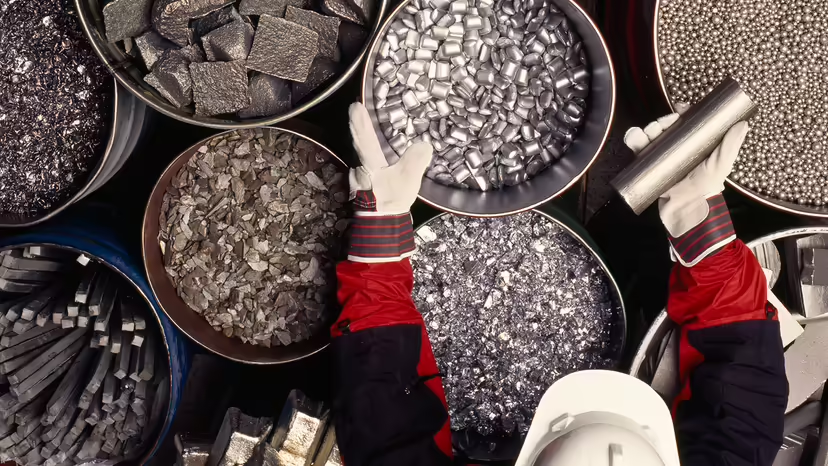
Better materials enable:
- Stronger structures
- Greater spans and design flexibility
- Improved safety and longevity
- More efficient use of resources
Ancient builders recognized this intuitively. Their ability to refine metals and improve consistency allowed for more ambitious tools, infrastructure, and architectural elements.
Today, the same principle applies. Whether it’s high-strength steel, energy-efficient building systems, or advanced coatings, innovation in materials continues to shape what’s possible in construction.
Practical Lessons for Fabricators and Contractors From Early Metalworking
While technology has evolved, several lessons from early metallurgy remain surprisingly relevant:
1. Process control matters
Then: Early metalworkers carefully managed heat and timing by hand.
Now: Precision fabrication tools, automated systems, and controlled environments ensure consistent, repeatable results.
2. Small changes in composition have big impacts
Then: Experimenting with alloys like copper and tin revealed how slight adjustments could dramatically improve strength and durability.
Now: Modern materials are engineered to exact specifications, where even minor variations can significantly affect performance.
3. Craftsmanship and knowledge go hand in hand
Then: Metallurgy relied on hands-on experience, observation, and learned skill.
Now: Expertise—whether human or programmed—remains essential to achieving quality, consistency, and efficiency.
4. Innovation starts with understanding materials
Then: Early metalworkers learned through trial and error how materials behaved under different conditions.
Now: Advanced testing, data, and modeling provide deeper insights—but success still depends on understanding how materials perform in real-world applications.
While the tools have changed dramatically, the core of metalworking hasn’t: understanding materials, controlling processes, and executing with precision still define successful outcomes.
How Ancient Techniques are Relevant to Metal Construction Today
It’s easy to view ancient metallurgy as purely historical, but its relevance is more practical than it might seem.
Today’s metal construction professionals are still focused on:
- Optimizing material performance
- Improving fabrication efficiency
- Reducing waste and increasing sustainability
- Delivering consistent, high-quality results
While the objective has remained the same, it’s the tools that have changed.
In many ways, modern advancements — like automated fabrication, digital modeling, and precision cutting — are extensions of the same pursuit that drove early metallurgists: mastering materials to build better.
Discover Modern Metal Innovation at METALCON
From early alloying techniques to today’s advanced fabrication technologies, the evolution of metallurgy tells a continuous story of innovation.
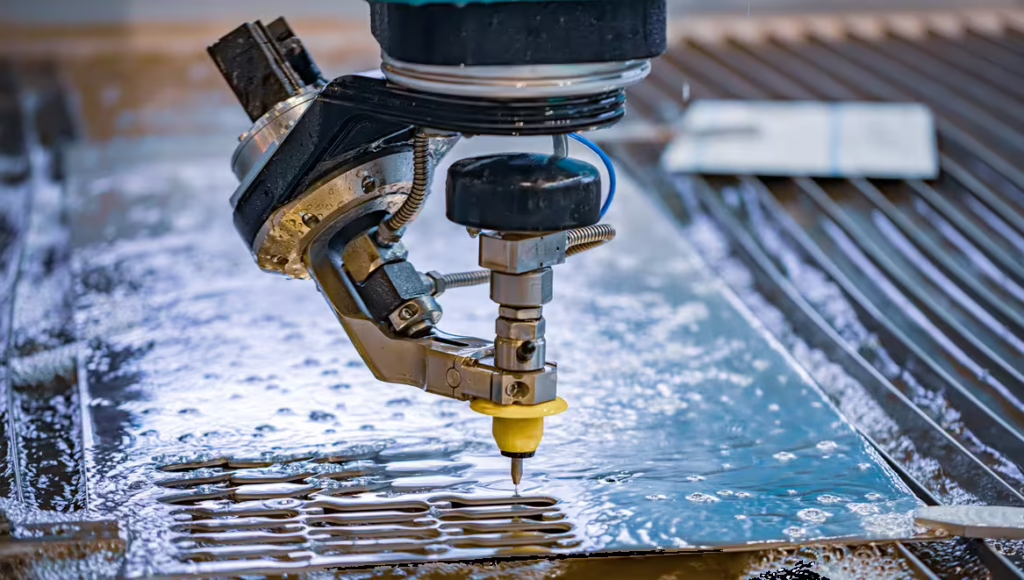
Modern metal fabrication has entered a new era — defined by digital technologies, automation, and precision-driven processes. Advancements like CNC machining, laser and waterjet cutting, and integrated CAD/CAM systems have transformed how metal is designed, shaped, and produced — delivering a level of accuracy and efficiency that was once unimaginable.
At the same time, automation, robotics, and the rise of smart manufacturing are reshaping production environments — improving consistency, increasing capacity, and allowing fabricators to focus on more complex, high-value work.
Yet even with these advancements, the foundation remains the same: understanding materials, controlling processes, and executing with precision. For metal construction professionals, staying competitive means continuing that tradition — learning, adapting, and applying new technologies to real-world challenges.
That evolution comes to life at METALCON. Explore the latest in metal construction materials, systems, and technologies — all rooted in the same foundational principles that have shaped the industry from the very beginning.
And three days at METALCON will shape your year ahead. Join us October 7–9 in Orlando to experience hands-on exhibits, expert-led education, and real-world applications.