As energy codes tighten and owners demand better long-term performance, energy efficiency is no longer a design add-on — it’s a starting point.
For contractors, architects, and developers, metal building systems (MBS) offer a clear advantage: integrated, high-performance assemblies that reduce energy use, improve durability, and support sustainability goals from day one.
Why “Envelope-First” Design Is Changing Metal Construction
For years, building design followed a familiar sequence: aesthetics first, performance second. But that approach is quickly becoming outdated.
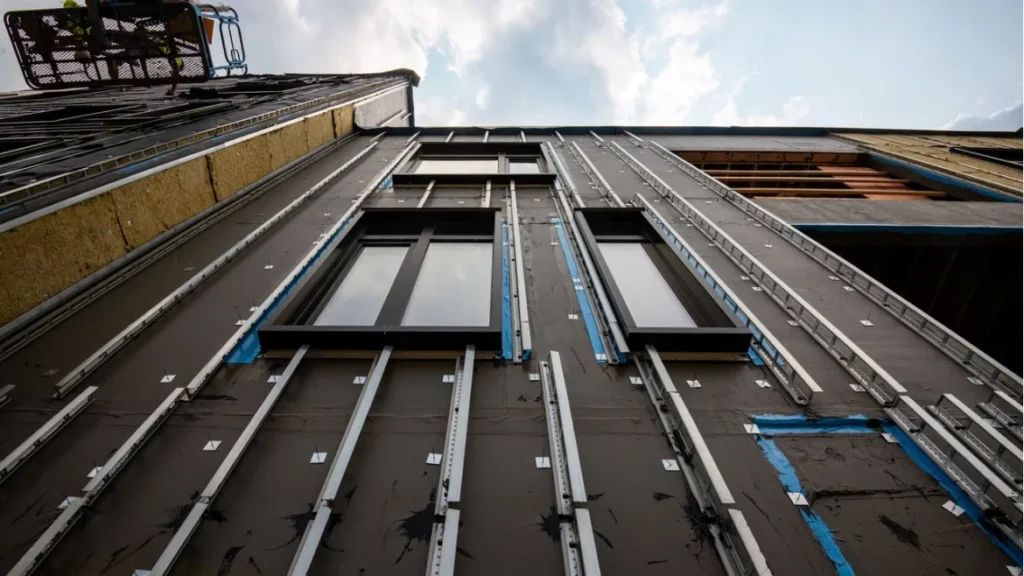
As Building Enclosure notes, “the architectural design process often followed a predictable hierarchy: form first, physics second.” Today, that hierarchy is shifting toward an envelope-first approach, where thermal performance and energy efficiency are defined at the start.
Metal building systems are naturally aligned with this shift. Because they are engineered as integrated assemblies, they allow teams to design the building envelope holistically — reducing redesigns, improving performance, and ensuring compliance.
This shift toward envelope-first thinking highlights one of the core strengths of metal construction: delivering high-performance systems from the ground up.
How Metal Buildings Improve Energy Efficiency
Metal building systems are designed as complete envelope solutions — not just structural frames.
Prefabricated components are manufactured to tight tolerances, resulting in fewer gaps and significantly reduced air leakage. A tighter building envelope means less conditioned air escapes, lowering heating and cooling demands year-round.
Metal roofing also integrates easily with solar systems. Standing seam profiles allow for panel installation without penetrations, preserving roof integrity while supporting renewable energy strategies.
Modern systems also address thermal bridging through continuous insulation, thermal breaks, and “warm wall” designs that position framing inside the insulation layer. The result is more consistent interior temperatures and improved overall efficiency.
Insulation and Thermal Performance in Steel Structures
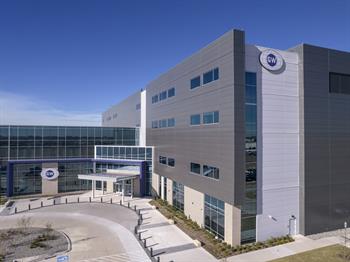
Insulation is where metal building systems deliver some of their most significant energy-performance gains.
Steel structures support a wide range of advanced insulation solutions, including layered systems with fiberglass, rigid board, and spray foam. These assemblies achieve high R-values while minimizing air leakage and thermal loss.
As Buildway notes, “Modern steel buildings when properly insulated can achieve impressive thermal performance that meets or exceeds most energy codes across the U.S. With the right combination of materials and installation, steel structures can easily rival traditional buildings in insulation efficiency.” This highlights that, when designed thoughtfully, steel structures can match or outperform traditional construction in thermal performance.
Reflective insulation further enhances efficiency by reducing radiant heat transfer, helping maintain stable interior temperatures year-round. Equally important, metal systems enable tighter air barriers and more precise sealing around penetrations—key factors in achieving long-term energy efficiency.
For more data on thermal performance and insulation strategies for steel buildings, read Buildway’s full article here.
Reflective Roofing and Solar Performance
Roofing is one of the most impactful contributors to building energy performance — and metal excels here.
According to the American Iron and Steel Institute, the roof can have the greatest impact on a building’s overall energy use, making material choice critical.
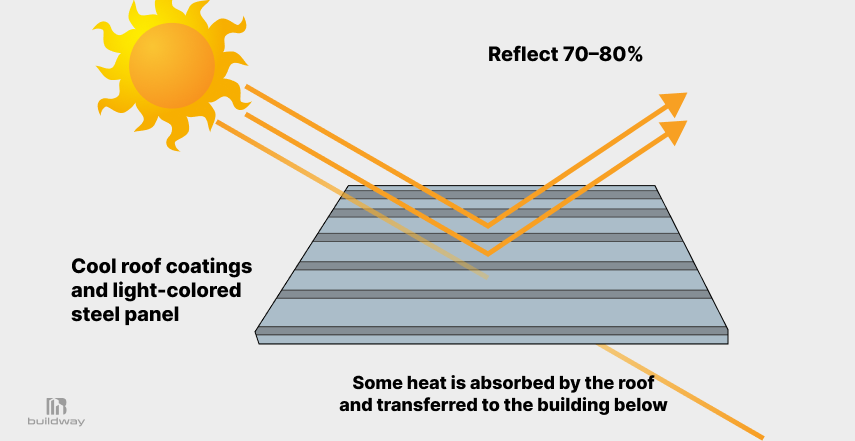
Metal roofing systems are highly reflective, especially when paired with cool-roof coatings. These systems can achieve solar reflectance levels above 70%, significantly reducing heat gain and lowering cooling loads.
In fact, reflective metal roofs have been shown to reduce cooling energy use by up to 40% in some applications, highlighting their impact on operational efficiency.
Beyond reflectivity, metal roofs also offer high thermal emissivity — meaning they release absorbed heat quickly rather than retaining it. This combination helps stabilize indoor temperatures and reduce strain on HVAC systems.
Metal roofing also supports broader sustainability strategies. Its durability often outlasts rooftop solar systems, making it an ideal platform for photovoltaic installations, while also enabling additional energy solutions like solar heat recovery systems.
Steel Systems and Green Building Standards
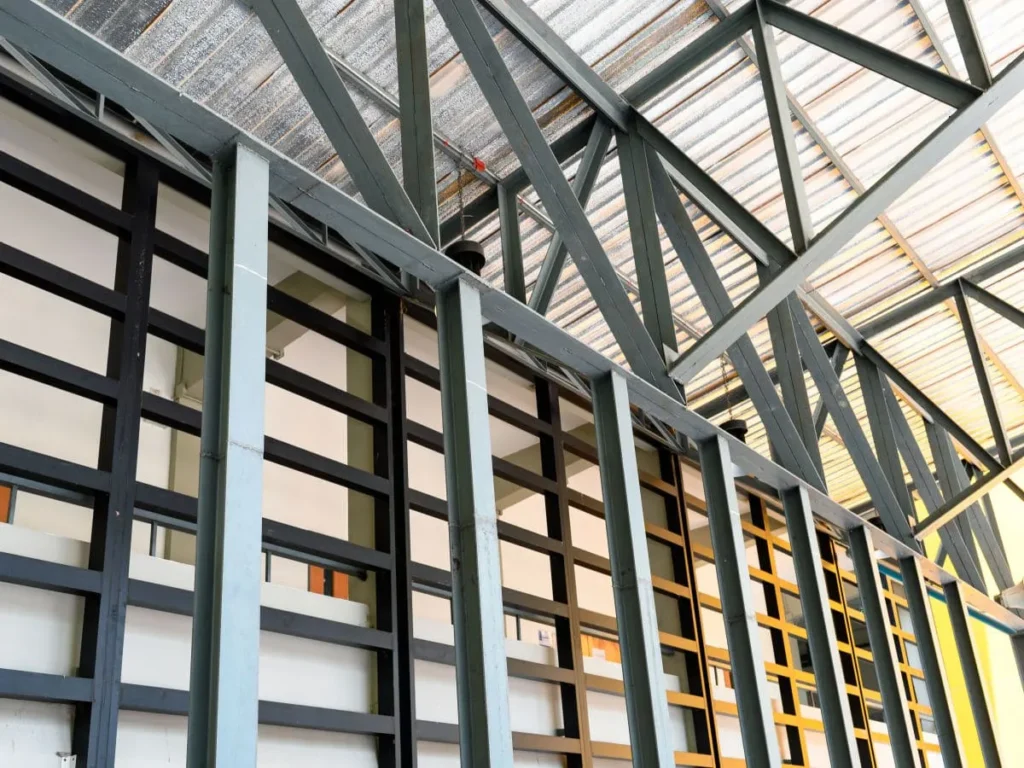
Sustainability is no longer optional — it’s a core project requirement. Metal building systems support these goals across multiple fronts.
Steel is one of the most recycled materials in the world, and many systems incorporate significant recycled content. It can also be fully recycled at the end of its life, supporting circular construction practices.
In addition, metal buildings contribute to:
- Reduced operational energy use
- Lower jobsite waste through prefabrication
- Long service life with minimal material degradation
- Compatibility with energy-efficient and renewable systems
These attributes help projects meet green building standards and align with evolving ESG and energy code requirements.
Long-Term Energy Cost Savings With Metal Construction
The true value of energy-efficient metal buildings is realized over time.
Reduced heating and cooling demands translate directly into lower utility costs. High-performance insulation, reflective roofing, and tighter building envelopes all contribute to more consistent interior temperatures and less reliance on HVAC systems.
As noted in a recent industry article from Jag Metals, LLC, the energy efficiency of metal buildings “translates to substantial energy savings over time,” reinforcing their long-term financial advantages.
Beyond energy savings, durability plays a major role. Metal systems resist damage from weather, pests, and moisture, reducing maintenance and replacement costs over the life of the building.
For owners and developers, the result is a structure that not only performs efficiently from day one—but continues to deliver measurable cost savings for decades.
Learn About Energy-Efficient Metal Systems at METALCON
As energy efficiency and sustainability continue to shape the built environment, staying ahead of emerging solutions is critical.
At METALCON, industry professionals can explore the latest in high-performance metal building systems, advanced insulation technologies, and energy-efficient roofing solutions. From expert-led education to hands-on exhibits, METALCON provides the insights and connections needed to design and build the next generation of energy-efficient metal structures.
In addition to attending METALCON in person, the METALCON Online library offers a wealth of webinars and resources on topics like energy-efficient roofing, insulation integration, and envelope-first design. Professionals can browse these materials to expand their knowledge, earn continuing education credit, and bring best practices directly to their projects.
Registration for METALCON 2026, scheduled for October 7-9 in Orlando, FL, opens soon. Get ON THE LIST to receive show updates.