What is the IIJA and the IRA?
The Infrastructure Investment and Jobs Act (IIJA); also known as the Bipartisan Infrastructure Plan) is the largest reinvestment in our country’s infrastructure in generations. The Inflation Reduction Act (IRA) is the largest climate/energy-related investment in our history and was signed into law on August 16, 2022. It provides billions of dollars in incentives, grants, and loans to support new infrastructure investments in the areas of clean energy, transportation, and the environment, creating an overlap between programs in the IRA and the IIJA.
The Infrastructure Investment and Jobs Act is more than two years into its five-year funding cycle, with a third of the money disbursed, and experts say its momentum is growing. The fruits of that funding are emerging and a wave of IIJA-funded projects are set to wrap up in 2024, especially in the roads and bridges sector.
Growing the Infrastructure Workforce through the Infrastructure Investment and Jobs Act
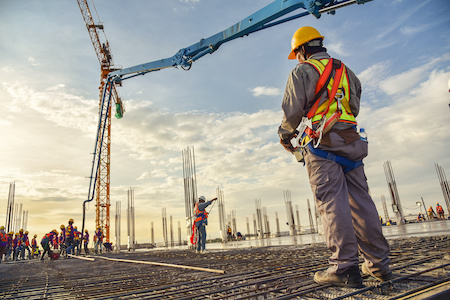
The IIJA newly allows states to expend funds from surface transportation programs on key workforce development activities including formula and competitive programs through which states may invest in workforce development, and encourages states to undertake long-term planning for their infrastructure workforce needs. More specifically, according to the National Governors Association:
- The IIJA newly allows states to obligate funds from four programs in the Fixing America’s Surface Transportation Act (FAST Act) toward workforce development, including registered apprenticeship and pre-apprenticeship programs.
- The IIJA includes a $5 billion formula grant program designed to build a national electric vehicle charging station network.
- The IIJA includes a $42.5 billion formula grant program designed to ensure everyone in the United States can access high-speed internet.
- The IIJA includes several formula and competitive programs through which states can invest in their infrastructure workforce including but not limited to: Federal Highway Administration’s On-The-Job Training Program, Federal Transit Administration’s Bus and Bus Facilities Program and Low or No Emission Grant Program, and USDOT’s University Transportation Centers.
- The IIJA encourages – but does not require – states to develop five-year Human Capital Plans to outline the immediate and long-term workforce needs they plan to address using the transportation and public infrastructure investments.
Infrastructure-Related Trends
Three trends builders can expect to see more of this year include revised federal regulations, more digitalization, and new procurement and delivery methods.
With additional public monies come revised regulations for civil builders to navigate. Last year, the White House clarified rules around which construction materials for federal infrastructure projects must be produced in the U.S. through its Build America, Buy America guidelines. It also updated the Davis-Bacon Act, effectively raising wages on government jobs, and announced a final rule that will require project labor agreements on federal construction projects costing $35 million or more.
HKA Global Partner and civil engineer Caryn Fuller says, “The complexity and capacity of the digital tools is rapidly expanding.” Builders need to remain current and trained on the ever expanding platforms. With this growing connectivity, the construction industry needs to be prepared and vigilant for new kinds of risks including cyberattacks targeting critical infrastructure like the energy, water, and wastewater sectors.
2024 Infrastructure Projects

To date, the Biden administration has announced more than $400 billion in infrastructure law funding for more than 40,000 projects. With $5 billion in funding for major transportation projects announced last month by the President, the following major projects are underway and expected to be completed this year:
- $1 billion to replace the Blatnik Bridge, a major connection between Superior, Wisconsin, and Duluth, Minnesota, increasing capacity for heavy trucks and creating a new shared-use path for pedestrians and bicyclists
- $600 million to replace the I-5 Bridge between Vancouver, Washington, and Portland, Oregon, with an earthquake-resistant, multimodal bridge
- $427 million to establish the first offshore wind terminal on the West Coast, off California
- $372 million to replace Cape Cod’s nearly 90-year-old Sagamore Bridge
- $300 million for a new container terminal for the Port of New Orleans
- $95 million to widen a 10-mile section of I-10 through the Gila River Indian Community and Pinal County in Arizona
- $142 million to fix the I-376 corridor in Pittsburgh to correct regular flooding
- $150 million to reconnect communities divided by the Cross Bronx Expressway in New York when it was built in the mid-1900s