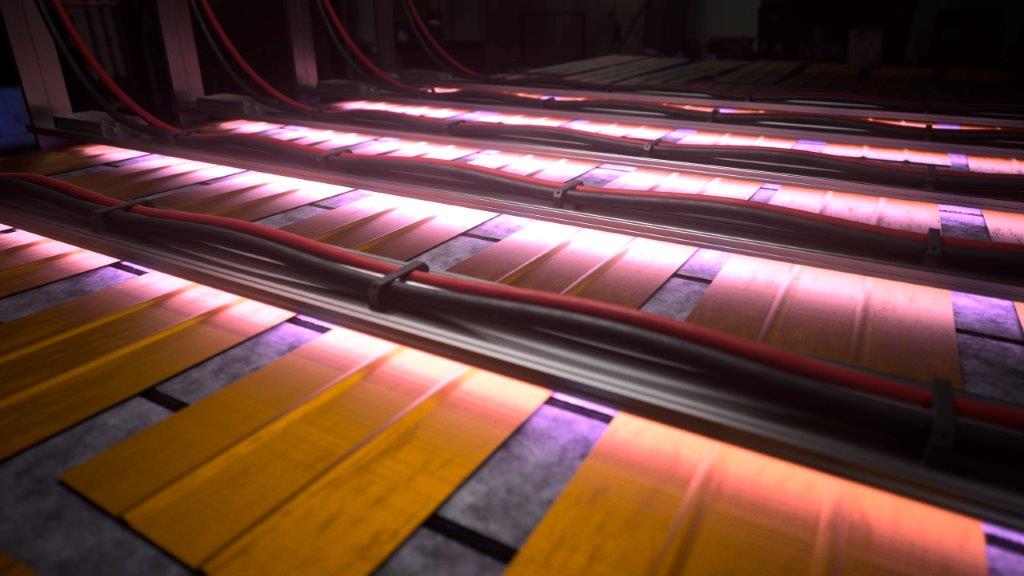
Energy curing has been used for decades on wood-based products like flooring, but new technologies formulated for pre-painted metal mark a major leap forward for the coil coating industry. Unlike traditional liquid coatings that rely on air or heat to cure, energy-curable coatings use radiant energy from ultra-violet (UV) lamps and electron beam (EB) devices to initiate the cross-linking process. These next-generation solutions offer significant opportunities for coil coaters to boost productivity and improve sustainability performance.
Regulatory efforts to restrict or eliminate volatile organic compound (VOC) emissions are raising interest in energy-cure formulations as they are made without solvents that release VOCs, helping manufacturers reduce their carbon footprints.
But energy efficiency is also driving the adoption of UV and EB coatings, since UV lamps and electron beam devices consume far less energy than traditional thermal drying ovens. The energy savings can be significant.
Productivity Gains
While the level of light or energy needed to cure UV/EB solutions varies depending on film thickness and chemistry type, these technologies contribute to higher productivity from faster finishing since no time is needed to preheat the substrate or for water or solvents to evaporate before curing.
Another advantage is that no thermal ovens are required for curing because the polymerization reaction takes place at room temperature, which can produce impressive cost and time savings. Additionally, UV/EB equipment is less capital intensive and typically has a more compact footprint than thermal ovens.
These alternative technologies cure in seconds or even faster with immediate conversion rates of 90% or more. Parts can be handled almost instantly for packing, storage and shipping, which reduces the need for floor space to hold inventory at various stages of the finishing process.
Performance Advantages
Energy-cured coatings deliver on protective performance by offering exceptional hardness, scratch and chemical resistance, and high flexibility.
While energy-curable coatings were once considered to be brittle, that is no longer the case. In the technology’s early years, these coatings were ideal for flat surfaces that didn’t require “flexible” paint. The latest energy-cure formulations meet the requirements for flexible substrates, good bonding strength and resistance to twisting and bending.
Because these coatings are made with 100% solid content and do not contain water or solvents, these solutions maintain nearly the same film thickness before and after the cure, with virtually no loss in weight.
With modifications to formulations, processes and curing equipment, sheen levels from deep matte to very high gloss can be achieved. While both technologies offer distinct advantages, the decision between UV- or EB-curable coatings includes factors such as initial equipment start-up costs, application requirements and ongoing operational costs.
PPG Pioneers Energy-Curable Solutions
With 30 years of leadership in UV- and EB-curable coatings for wood, PPG has brought the energy efficiency and high speed of energy curing to metal coil coaters with the introduction of the PPG DuraNEXT™ family of primers, backers, topcoats and clearcoats. It is PPG’s first energy-curable solution for metal.
The groundbreaking portfolio received the METALCON Top Product Award in 2024.
Why Choose DuraNEXT
- Highly flexible, resistant to abrasions, impact and chemicals
- Excellent weatherability with UV- and humidity-resistant
- Resists color and gloss fading
- Requires minimal maintenance and easy to clean
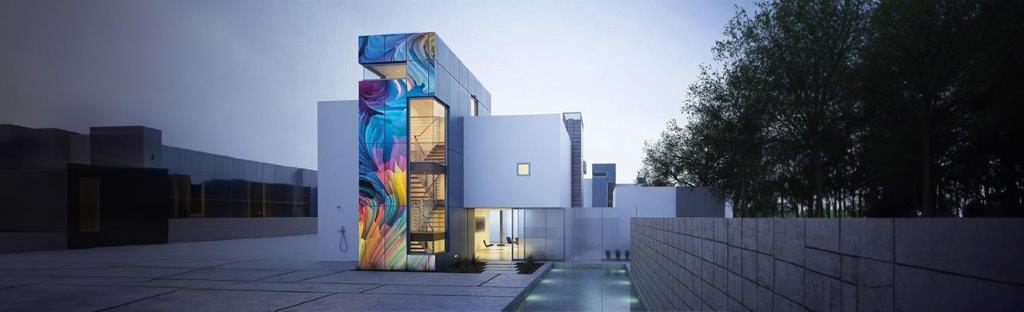
- Allows for infinite design possibilities on digital printing on coiled steel
Typical Uses
- Garage doors
- Cladding
- Commercial buildings
- Barns
- Sheds