Metal construction is no longer just a practical solution — it’s a strategic one. From shifting market momentum and fabrication automation to sustainability advancements, design excellence, and workforce development, 2025 proved to be a pivotal year for the industry. While growth accelerated and innovation scaled up across commercial, industrial, and institutional construction, the year also brought volatility — particularly in the first half, when global trade policy and tariff uncertainty sent cost shockwaves through the construction economy.
Strong Market Momentum Despite Volatility
Demand for metal roofing, wall systems, and pre-engineered metal buildings (PEMBs) remained strong throughout 2025, led by warehouses, manufacturing facilities, healthcare, and institutional construction. Owners continued to prioritize speed of construction, durability, and predictable life-cycle costs — key advantages for metal systems.
However, that market momentum unfolded against unprecedented volatility. By mid-2025, U.S. steel and aluminum tariffs were sharply increased, triggering rapid price escalation, supply uncertainty, and project re-pricing across the country. Contractors reported delayed starts, value engineering, and frequent budget resets as material pricing fluctuated week to week, putting the entire industry on alert during the year’s first half.

In June, MetalMining reported, “The Construction MMI (Monthly Metals Index) moved sideways, dropping by 2.0% month-over-month. In early June 2025, new Trump tariffs doubled pre-existing steel and aluminum duties from 25% to 50%. As buyers scrambled, U.S. aluminum premiums immediately hit a record 60¢/lb. Meanwhile, the tariff surge is already squeezing the U.S. construction industry.” By Q3, MetalMining further noted, “The global stainless steel market showed zero signs of recovery … with no expectation of a turnaround in the short term.”
In his keynote address to METALCON attendees, leading economist Alex Chausovsky of The Bundy Group, added important context: “While 37% of tariffs have been passed to U.S. consumers, 9% have been absorbed by companies. The overall economic impact remains limited, with tariffs typically taking 12–18 months to fully register.”
Closing his keynote, Alex emphasized for the metal construction industry that while tariffs and global uncertainty have complicated the economic landscape, today’s conditions do not signal a recession. Instead, he urged the industry to stay informed, remain agile, and proactively position for continued opportunity as momentum carries into 2026.
Technology & Fabrication Take Major Steps Forward
As labor pressures and material costs intensified, many fabricators accelerated investments in automation in 2025. Robotic welding, AI-driven quality control, and digitally optimized roll-forming lines became increasingly common across fabrication shops, improving consistency, speed, and quality.
Innovative Metal Framing
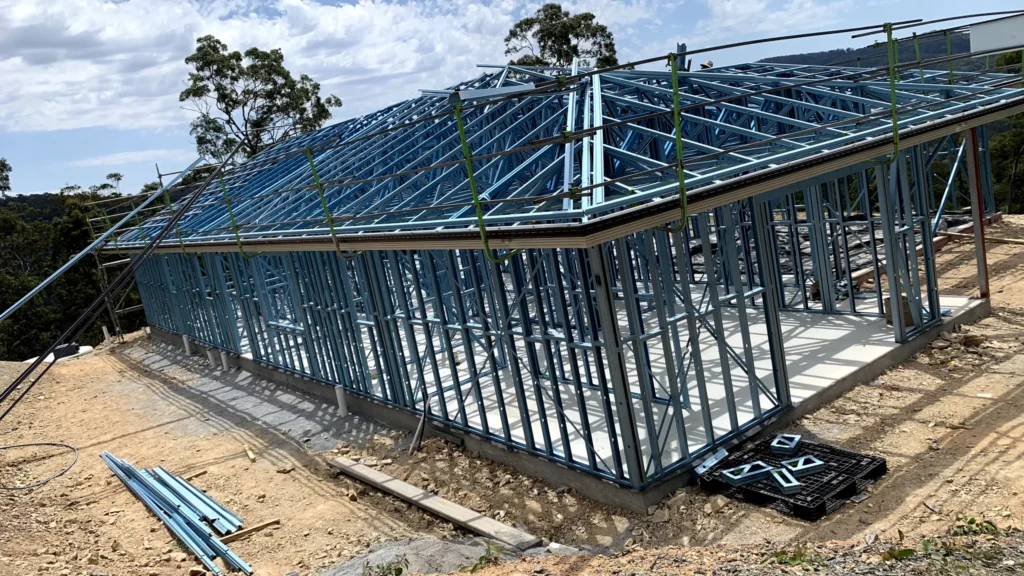
One of the hottest trends this year was in innovative metal framing. In a deep dive, MGT Enterprises says, “From robotic precision and prefabricated systems to next-gen materials and smart factories, the future is evolving fast, redefining everything from skyscrapers of commercial developments to residential constructions.” From automation and robotics to AI-based quality control, innovative metal framing remains ahead of the curve with smarter, greener, and more productive solutions.
PreFab Construction
Off-site manufacturing and modular construction also expanded rapidly as builders sought tighter schedule control and reduced job-site risk. With fewer workers available and projects moving faster, controlled fabrication environments provide safer workflows, greater predictability, and more reliable project outcomes — making automation not just an efficiency upgrade, but a strategic necessity.
According to Claris Design•Build, “In 2025, several key trends will shape the pre-engineered metal building industry, including energy-efficient innovations, automation in construction, customizable designs, and improved resilience against extreme weather.” Their report highlights the integration of sustainable and energy-efficient designs, smart technologies, prefab and faster construction, customization, hybrid materials, and disaster-ready systems, demonstrating how technology and fabrication advances are reshaping the metal construction landscape.
Sustainability Moves From Goal to Standard
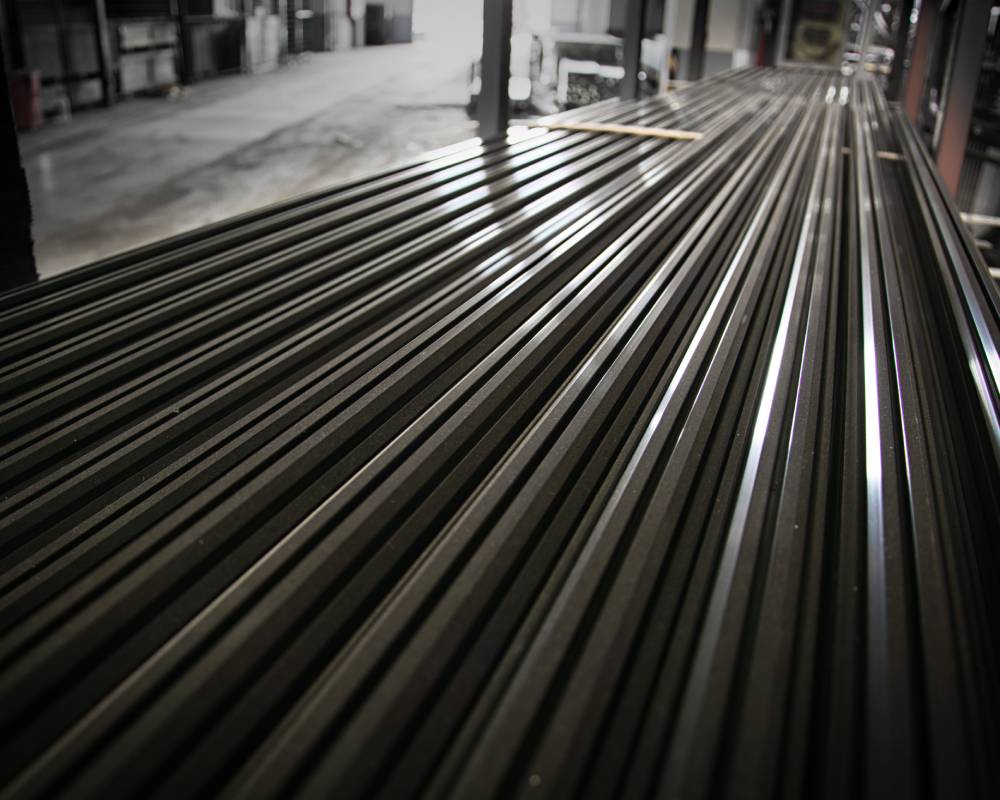
Sustainability officially crossed the threshold from “it’s a good thought” to “market expectation” in 2025. Recycled steel content, low-VOC coatings, solar-ready roofs, high-performance insulated metal panels, and cool-roof technologies became baseline requirements for many projects.
Beyond North America, global investment in low-carbon “green steel” surged this year as producers raced to develop cleaner steelmaking processes. Earlier this year, a Reuters article put a spotlight on the green technologies set to transform the geopolitics of steelmaking. “For the first time since the advent of the blast furnace, iron and steelmakers have some routes to remove the majority of emissions. And it’s clear that those new pathways will transform the geopolitics of iron and steelmaking.”
Just this week, Reuters also reported that Australia’s Fortescue, the world’s fourth-largest iron ore supplier, said that it would cooperate with a subsidiary of China Baowu, the world’s largest steelmaker, to explore new green technology for accelerating decarbonisation in the hard-to-abate steel industry. The project aims to develop a new technology that will remove the process of pre-treating raw materials such as iron ore sintering, pelletizing and coking, typically a large contributor to carbon dioxide emissions in steelmaking.
These advances signal a long-term transformation in the environmental footprint of metal construction — and reinforce why steel’s recyclability, durability, and evolving production methods continue to drive its appeal in net-zero and ESG-driven projects.
Design Excellence on Full Display
Architectural metal had a banner year in 2025. Across cultural institutions, education facilities, sports complexes, and mixed-use developments, metal was no longer just a performance solution — it became the design centerpiece. Design and architectural metal work is leveling up — metal is showing that it’s not just practical, but also high-design.
2025 Showcase Projects & Industry Recognition
The annual Metal Construction News (MCN) Project Excellence Awards highlighted 2025’s best metal construction projects. The overall winner was the Micron Team Member Center — celebrated for its sweeping curved metal-panel façade, precision fabrication, and design-forward aesthetic. Other notable winners included: La Nube STEAM Discovery Center in El Paso for complex metal roofing and bold architectural design. Retrofits such as Fraser Hall (walls retrofit) and Davidge Hall (metal roofing retrofit) — demonstrating the enduring value and adaptability of metal in renovation and preservation projects.
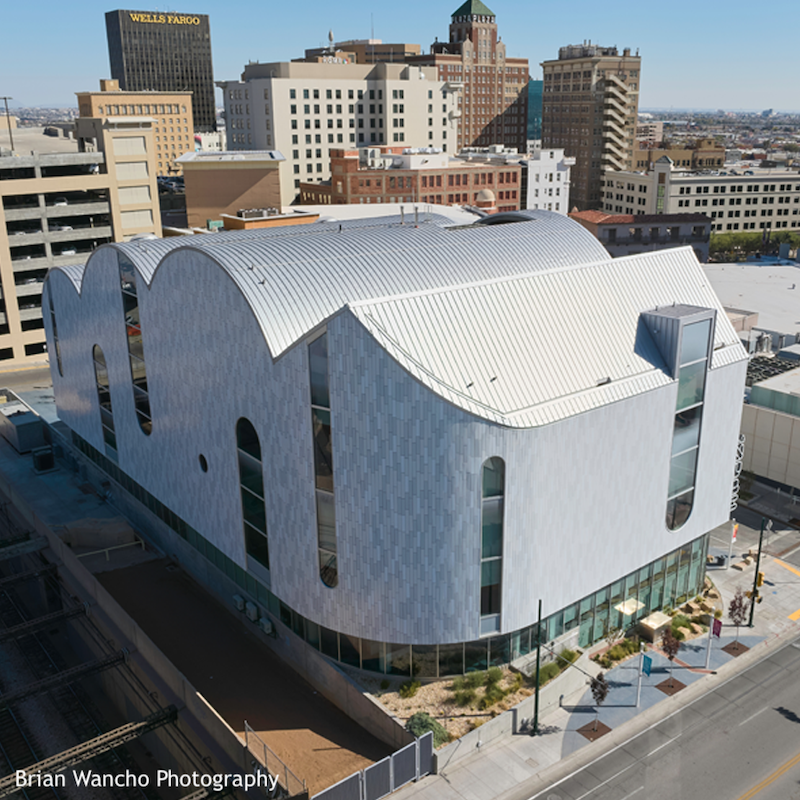
La Nube STEAM Discovery Center also received “Best Overall” in the MCA 2025 Design Awards. For the Creative Use of Metal, 1st place went to Mirror Ceiling at Workplace Resource in Denver, CO, with 2nd place awarded to the Witherspoon Student Center in NC State University.
Metal Architecture‘s 2025 Design Awards gave top honors to the Alma Switch House in Manhattan Beach, California, for reimagining the possibilities for a narrow infill lot with a compact, metal-clad design.
On the industrial side, the 2025 Metal Building Contractors and Erectors Association (MBCEA) Building of the Year top honor went to AdventHealth Sports Park at Bluhawk — a major metal-building project underlining the strength of metal building systems in large-scale, high-performance structures.
Workforce & Industry Investment
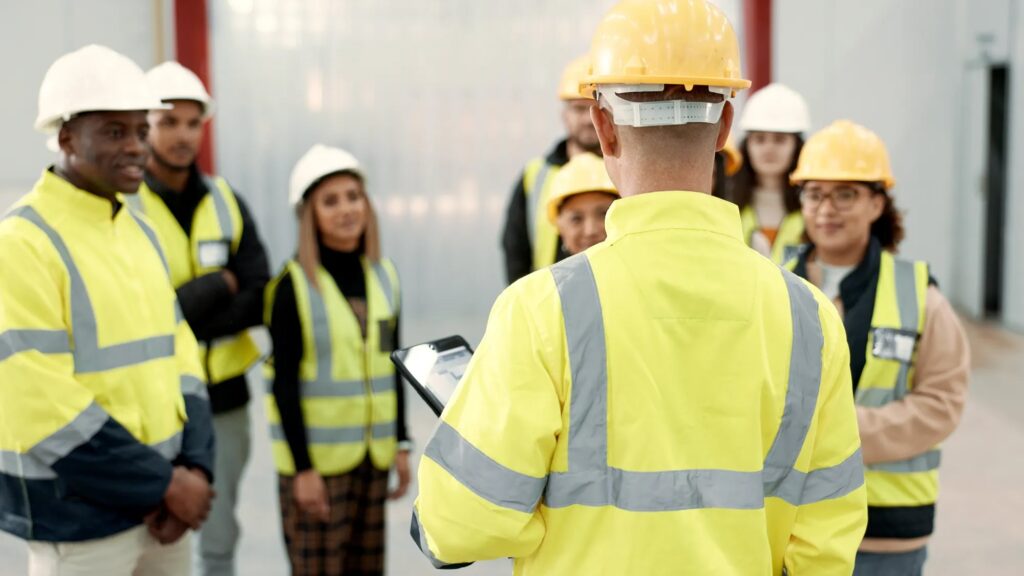
With demand rising and technologies advancing, workforce development escalated to high priority in 2025. Associations, manufacturers, and contractors expanded training programs, safety initiatives, and installer certifications to address persistent labor shortages and elevate field quality.
As tariffs, pricing pressures, and tighter schedules converged, the value of skilled labor became even more pronounced. Fewer mistakes, faster installs, and safer job-sites were no longer optional — they became essential for protecting margins and keeping projects on schedule.
Industry associations are stepping up to meet the challenge:
- The Metal Construction Association (MCA) highlighted key achievements in its 2024 Annual Report, including the launch of a scholarship program for children of member companies, new technical resources, and continued growth of its Future Leaders Program.
- In response to the shortfall of new workers entering the trades, the Metal Building Contractors and Erectors Association (MBCEA), in partnership with the Metal Building Institute (MBI) and NCCER (National Center for Construction Education and Research), launched a comprehensive Metal Building System Assembly Training Program. Designed to qualify as a formal apprenticeship, the program creates craft workers skilled in the unique needs of metal buildings. Standardized, modernized skills training like this is critical for the industry’s future.
- METALCON continues its workforce investment with year-round programming via METALCON Online, offering accredited education across all areas of metal construction.
Through these initiatives, the industry is building the next generation of skilled workers while reinforcing quality, safety, and innovation in metal construction.
The 2025 Takeaway
2025 will be remembered as the year metal construction fully stepped into its role as a strategic building solution. Despite volatility, the industry pushed forward with innovation, sustainability, design excellence, and workforce investment — positioning metal construction for continued strength and opportunity in 2026 and beyond.